


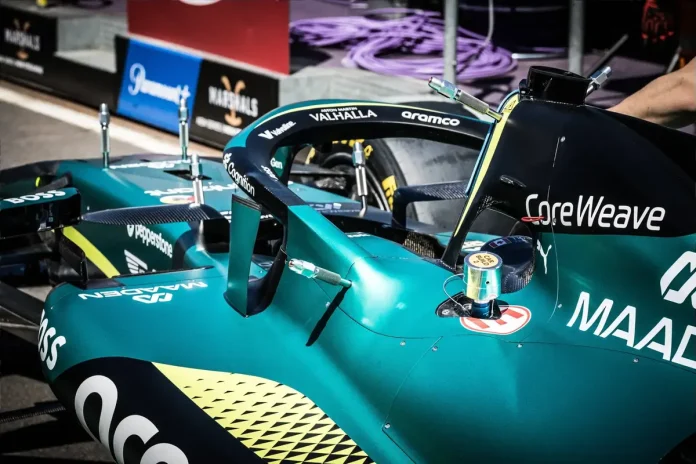
In a shocking turn of events for the Formula 1 community, Aston Martin has announced that they will not participate in the 2026 Australian Grand Prix due to a serious health risk for their drivers, Fernando Alonso and Lance Stroll. Team principal Adrian Newey revealed that the potential for permanent nerve damage has left the racing squad with no choice but to prioritize driver safety over competition.
The team has faced a tumultuous preseason, arriving late to the shakedown test in Spain and struggling with persistent mechanical issues at the Bahrain International Circuit. Aston Martin’s AMR26 proved to be a lackluster performer, managing only 128 laps in the second test, with their best single stint barely reaching half of the scheduled race distance in Melbourne.
This disappointing performance comes on the heels of significant investments by team owner Lawrence Stroll, who had pledged substantial resources to enhance team facilities and attract top-tier talent like Newey, widely regarded as the pinnacle of engineering prowess in the sport. Additionally, Aston Martin secured Honda as their exclusive power unit supplier, a bold move after Honda’s departure from Red Bull. However, the ambitious plans for championship contention have been thwarted by unforeseen complications.
The gravity of the situation escalated with Newey’s alarming disclosure that the vibrations caused by the car’s hybrid power unit were resulting in severe discomfort for the drivers. “Fernando is of the feeling that he can’t do more than 25 laps consecutively before he will risk permanent nerve damage into his hands. Lance is of the opinion that he can’t do more than 15 laps before that threshold,” Newey stated, underscoring the urgency of the issue.
The root of the problem lies within the car’s hybrid system, particularly concerning how it manages high-voltage battery deployment. Testing in Bahrain revealed that these battery issues, coupled with aggressive energy deployment, were transmitting harmful vibrations through the chassis and into the drivers’ hands, risking long-term health complications. As Newey pointed out, “The battery is the thing that we have been focusing on…The transmission of that vibration into the chassis, we haven’t made any progress on.”
Aston Martin’s decision to withdraw is a preventive measure, emphasizing a commitment to the well-being of their drivers rather than chasing points on the track. This could signal a challenging year ahead, as the team continues to search for solutions. Koji Watanabe, president of Honda Racing Corporation, expressed that while efforts are underway to rectify the issue, a clear timeline for resolution remains uncertain.
For Alonso, this situation may evoke memories of his tumultuous second stint with McLaren, where he faced similar frustrations with Honda power units. In 2015, a serious crash during pre-season testing raised questions about technical reliability, which Alonso himself attributed to mechanical failures. The specter of such past challenges now looms over his current situation with Aston Martin, as the team grapples with the reality of their precarious position in the sport.
As fans await further developments, the situation at Aston Martin serves as a stark reminder of the fine line between ambition and safety in the high-stakes world of Formula 1 racing.