


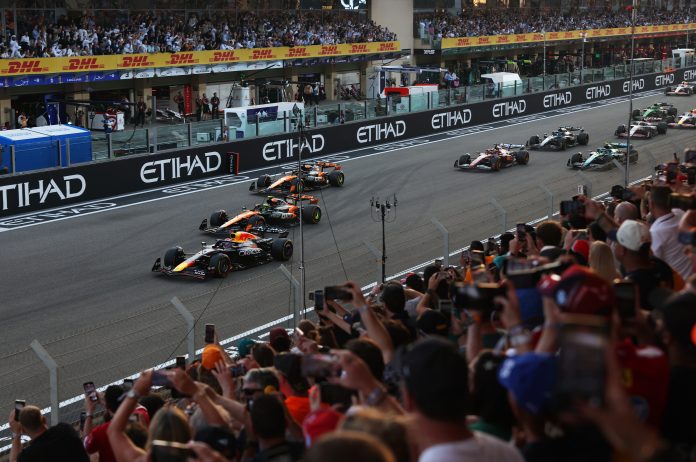
Formula 1 is riding an unprecedented wave of popularity, with the 2025 season solidifying its status as a global phenomenon, particularly in the United States. The thrill of a gripping three-way title battle captivated fans, culminating in an electrifying finale where Lando Norris emerged victorious. The young British driver outmaneuvered four-time world champion Max Verstappen and his McLaren teammate Oscar Piastri to snatch the championship crown in a season that will go down in history as one of the sport’s finest.
McLaren’s triumph was not just limited to Norris’s individual success; the team also clinched the constructors’ championship, marking their first championship double since 1998. This achievement underscores a remarkable resurgence for the iconic team, heralding a new era of competitiveness in Formula 1. The excitement of the season was palpable, with the Abu Dhabi Grand Prix standing out as a pivotal moment, reminiscent of the 2021 showdown between Verstappen and Lewis Hamilton. For the first time since that epic battle, fans were left in suspense, uncertain of who would be crowned champion heading into the final race, and it was the first occasion since 2010 that more than two drivers had a shot at the title during the last weekend.
The popularity of Formula 1 has reached new heights, with ESPN revealing that 2025 was the most-watched year since the network began broadcasting the sport in 2018. An astonishing average of 1.3 million viewers tuned in for each grand prix, representing a staggering increase of 135 percent compared to the inaugural year of the ESPN-F1 partnership. This marks a significant rebound from previous seasons, which saw viewer numbers dip to 1.1 million in both 2023 and 2024 after a high of 1.2 million in 2022. The final race in Abu Dhabi played a crucial role in this spike, with 1.5 million fans flocking to their screens, cementing the event’s status as a must-watch spectacle.
In stark contrast, the NASCAR Cup Series experienced a decline in viewership, highlighting a shifting landscape in American motorsports. Despite securing a lucrative $7.7 billion TV rights deal in 2024, which is set to last through 2031, NASCAR’s decision to broadcast several races on the less prominent USA Network instead of major networks like NBC, CBS, or ESPN has contributed to a 15 percent drop in viewership in 2025. This decline raises questions about the future of NASCAR in a rapidly evolving media environment.
The dramatic shifts in audience engagement between Formula 1 and NASCAR underscore a pivotal moment in the motorsport world, with F1 evidently capturing the imaginations of fans across the globe while NASCAR grapples with declining interest. As the dust settles on an unforgettable season, the implications for both racing series will undoubtedly shape the narrative in the years to come.