


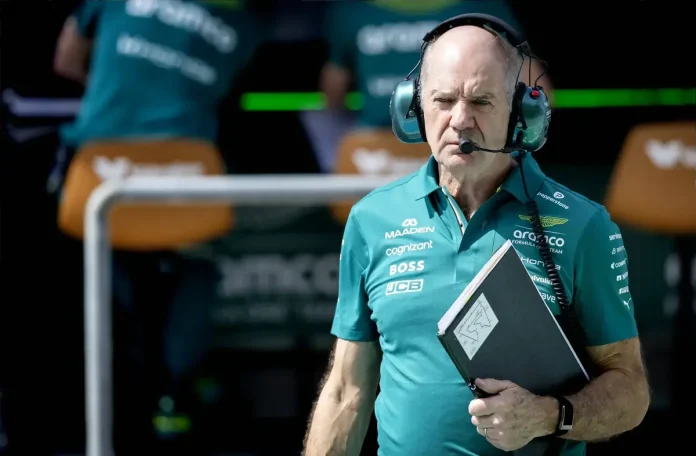
In a shocking twist reminiscent of the notorious ‘GP2 engine’ era, Fernando Alonso and Aston Martin find themselves grappling with a barrage of challenges as they head into the new season. The latest Bahrain testing has revealed disturbing signs of trouble, with the Honda engine faltering under pressure and raising serious questions about its reliability. But while Honda is taking much of the heat, could the real issue lie with Adrian Newey’s design?
The final week of testing was anything but smooth for Aston Martin. A critical battery issue with their Honda engine on Thursday forced the team into a limited testing protocol on Friday, resulting in a dismal total of just six laps for the AMR26. In stark contrast, their competitors managed to amass significant mileage, leaving Aston Martin in a precarious position as the race season looms. With the deadline for the 2026 power unit homologation approaching fast, scrutiny on Honda has intensified. Manufacturers must submit their homologation dossiers by March 1, and any hope for last-minute adjustments is quickly evaporating.
Time is of the essence, as once the submission is made, changes become nearly impossible without FIA approval. This escalating pressure has diverted some attention away from Newey, but his role in this unfolding saga cannot be overlooked.
Aston Martin’s woes seem to stem not solely from Honda’s shortcomings but also from Newey’s design choices. During the initial Bahrain test, it was clear that the Honda power unit was struggling, compounded by inadequate engine cooling. Despite efforts to enhance airflow through additional vents and gills on the sidepods, the modifications came at a cost to aerodynamic efficiency. The real problem, however, lies in the restrictive bodywork of the AMR26, a byproduct of Newey’s compact aerodynamic approach. The tightly spaced sidepods are suffocating the engine, preventing it from cooling effectively, and increasing the risk of overheating—an issue that could lead to catastrophic engine failure.
While other teams have embraced designs that allow their engines to breathe freely, Newey’s approach has backfired in the sweltering conditions of Bahrain, revealing critical flaws that were not apparent during the innovative Barcelona shakedown. The integration of engine and design must be a harmonious relationship; one cannot excel without the other. Just because Mercedes is poised to develop a powerful engine for 2026 does not guarantee that customer teams like McLaren, Alpine, or Williams will find success unless their designs complement that power.
Currently, Aston Martin is facing a challenging uphill battle, with a disconnect between their engine and design that has cost them valuable testing time. While Honda stands accused as the primary culprit in this predicament, it is equally clear that the design has not hit the mark. With both teams in Silverstone and Sakura scrambling for solutions before the Australian Grand Prix, collaboration is essential. The performance riddle Aston Martin faces is one that requires a unified approach; it’s a complex puzzle that no single genius can solve alone. The clock is ticking, and the pressure is mounting—can Aston Martin turn their fortunes around, or will they continue to flounder in the shadow of their rivals?