


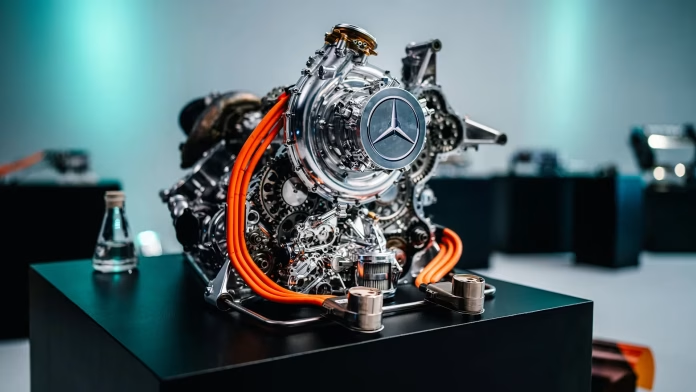
As the engines of controversy roar ahead of the Australian Grand Prix, the FIA is scrambling to address the mounting tensions surrounding Mercedes’ alleged advantage in the new Formula 1 engine regulations. Nikolas Tombazis, the FIA’s single-seater director, has stated that the governing body is determined to find a resolution before the season kicks off in Melbourne. This urgent push comes on the heels of Cadillac F1 CEO Dan Towriss’s bold claim that rival manufacturers have banded together against Mercedes, accusing the German giant of exploiting a regulatory loophole regarding compression ratios in the latest engines.
At the heart of this unfolding saga is a potential breach of the newly established regulations that dictate a 16:1 compression ratio for engines. Reports suggest that clever engineering has allowed Mercedes and Red Bull Powertrains Ford to manipulate this ratio when engines are at operational temperatures, raising alarms among their competitors. Tombazis made it clear that the FIA is not interested in litigation or courtroom battles but rather in fostering fair competition on the racetrack.
Tombazis elaborated on the complexities of compression ratios, explaining that they are foundational to engine performance. “The higher that compression ratio is, the more, generally speaking, efficient the engine is,” he noted. However, he cautioned that pushing the limits too far can lead to detrimental effects, such as engine knock. The FIA has made it a priority to ensure that new entrants into the sport can compete on level ground with established teams like Mercedes, Ferrari, and Honda, which is vital for the sport’s future.
The introduction of the 50/50 biofuel and electric engines in 2026 aims to shake up the grid, with Audi and Red Bull Ford joining the ranks of power unit manufacturers. Tombazis emphasized that adjusting the compression ratio from a previous limit of 18:1 to a more feasible 16:1 was intended to invite new competitors and create a more balanced playing field. Yet, with the brilliance of the engineers involved, it seems some have found ways to exploit even these adjustments, igniting the current debate.
As discussions with the FIA continue, Tombazis maintains that a resolution is in sight. He reiterated the organization’s commitment to ensuring that the championship remains a showcase of driving and engineering excellence rather than a battleground for rule interpretation. “We want people to be competing on the track and not in the courtroom,” he asserted, highlighting the FIA’s determination to keep the sport pure and competitive.
With the season looming, the stakes are higher than ever. Teams are on edge, knowing that any advantage can be the difference between victory and defeat. Tombazis’s remarks indicate a proactive approach to the engine saga, but as the teams prepare for the upcoming season, one question looms large: will the FIA’s efforts be enough to quell the unrest among manufacturers, or will we see further disputes emerge as they vie for supremacy in the high-octane world of Formula 1? Fans and teams alike are awaiting the answer as the engines rev up for the season ahead.