


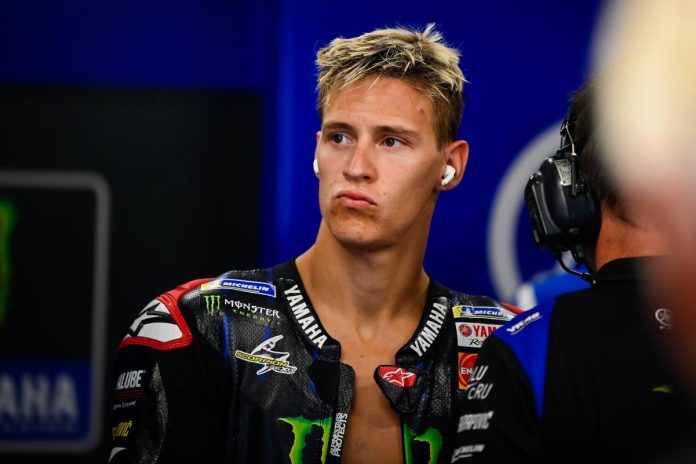
When Yamaha unveiled its 2026 racing team, it sent a resounding message: a new chapter has begun. This isn’t just about fresh faces or a sleek new aesthetic; it’s a bold launch of the V4 project, a technical gamble that could redefine the future for the iconic Iwata brand. At the heart of this transformation is Fabio Quartararo, a rider whose journey with Yamaha has been nothing short of a rollercoaster, filled with triumphs and tribulations.
Quartararo’s relationship with Yamaha transcends mere professional ties; it’s deeply personal. “I have spent my entire MotoGP career with Yamaha,” Quartararo reflected in a recent documentary. He expresses a profound commitment, stating, “For me, it’s personal to try to bring Yamaha back to the top.” This sentiment encapsulates the emotional weight behind every choice he makes as he strives to reclaim glory.
A pivotal moment in Quartararo’s recent journey occurred not on the racetrack but in a pivotal meeting. His encounter with Max Bartolini, a key figure in Yamaha’s technical project, marked a significant shift in his outlook. Quartararo, determined to forge a connection, drove seven hours for a three-hour discussion. From that meeting sprang what Quartararo describes as a profound internal transformation. “Max Bartolini is someone I have had a great connection with from day one,” he explains. Bartolini’s honesty about the challenges ahead struck a chord with the world champion. “He made me go from not believing in the project to believing in it,” Quartararo admits, emphasizing that Bartolini never promised instant victories.
Yamaha’s challenges extend beyond technical hurdles; they involve a cultural shift. Quartararo articulates this when discussing the differences in work ethic between Japan and Italy. “We know that the Japanese mentality is much slower than the Italian, and we’re working to change that,” he notes, highlighting a critical component of their internal transformation. This shift is already manifesting in daily practices. Quartararo provides a telling example: “When something works, we don’t wait two months to use it; we implement it immediately.” Such seemingly small changes can spell the difference between stagnation and progress in the fast-paced world of MotoGP.
As Quartararo navigates these changes, he keeps a keen eye on the competition. Honda’s recent resurgence serves as a stark reminder that even giants face downfall but can rise again. “Honda went through a tough time, but now they are back,” Quartararo observes, acknowledging that their improved performance has elevated them in the concession system, while Yamaha remains at the lowest tier for 2026. This regulatory disadvantage intensifies the pressure on Yamaha to refine every decision and expedite the development of their new technical concept.
Looking ahead, Quartararo views 2026 as a critical year—one that will validate Yamaha’s chosen path. “The real project for Yamaha is for everything to function by 2026,” he explains, focusing more on clear indicators of progress than immediate titles. “We need to see if the path we have taken is correct and if results come in a relatively short time, or at least if there are significant improvements.” For Quartararo, however, the most crucial element goes beyond strategy: it’s all about the feelings he experiences on the track. “The only thing that can convince me is feeling quick and having fun,” he asserts. In MotoGP, when a rider stops enjoying the sport, everything else becomes irrelevant.
The narrative takes a more intimate turn as Quartararo acknowledges the duality of his commitment to Yamaha and his personal aspirations. “When I signed for this year and next, my goal was to achieve great results for Yamaha,” he recalls. Yet, circumstances have shifted. “Right now, I also want to think about myself, my personal future, and my goals.”
Voices from the Yamaha camp, such as team manager Maio Meregalli, have expressed a desire to keep Quartararo as a cornerstone of their project. Nonetheless, the French rider remains steadfast in his message: he demands competitiveness and the chance to contend at the front. This is not rooted in ego but in a fundamental belief that he belongs at the top.
The bond between Quartararo and Yamaha is profound, almost inseparable. Yet, the upcoming 2026 season promises to be a defining test—one that will determine if this relationship can once again translate into victories, or if both parties will need to reconsider their journey together.