


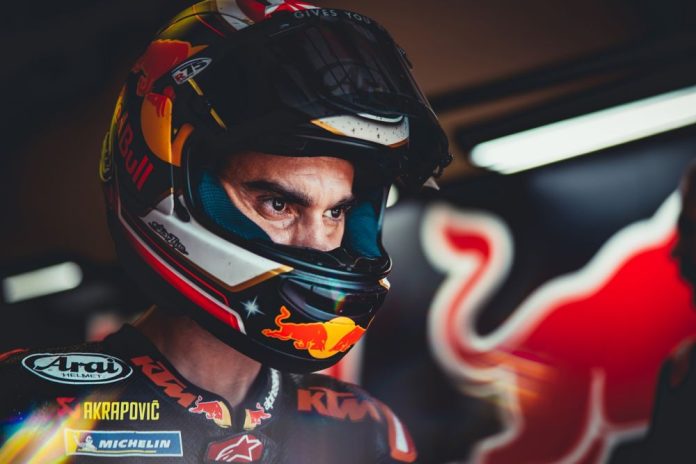
When Dani Pedrosa speaks, the entire MotoGP paddock stops to listen. The legendary triple world champion and key test rider for KTM has unveiled some groundbreaking insights into what the future holds for the sport in 2027. His message is crystal clear: the most significant upheaval in MotoGP won’t stem from engine advancements but will instead revolve around tire technology.
The good news for KTM fans is that the ambitious 2027 project is progressing smoothly. Pedrosa confidently states, “So far, everything is going according to plan at KTM for the new bike.” This is a relief, especially considering the new engine has already been tested without any issues, marking a crucial milestone in a completely overhauled set of regulations. However, this promising development comes with a caveat—the timeline hinges on a pivotal factor: the tires.
Starting in 2027, Pirelli will become the sole tire supplier for MotoGP, and according to Pedrosa, that’s where the true game will be played. Drawing from his rich experience of navigating the transitions between Michelin and Bridgestone, Pedrosa warns that the impact of this change could be monumental. He emphasizes, “everything will depend on the significance of this difference. It’s a radical change.”
The implications of tire performance extend beyond mere grip; they can dictate the entire motorcycle’s design, from chassis rigidity to riding style, braking techniques, throttle management, and entry aggression into corners. The teams that grasp the intricacies of tire dynamics early on will gain a staggering advantage. Pedrosa recalls past experiences in Moto2 and Moto3 when the switch to Pirelli necessitated drastic alterations to chassis setups and riding styles. He cautions, “It’s a process: who adapts first, who understands first…”
This serves as a stark warning: the 2027 season could unveil sharp disparities right from the start. Pedrosa has already tested Pirelli tires at the Misano World Circuit Marco Simoncelli, but he remains tight-lipped about the specifics, citing contractual obligations. “I’m not authorized to disclose information. It’s stipulated in the contract,” he says, a statement that reveals just as much as any detailed analysis could.
On regulatory changes, Pedrosa is more forthcoming. A significant reduction in aerodynamic features, a ban on electronic ride height devices, and a return to a more “physical” motorcycle are all on the table. “Yes, I think it’s important,” he asserts. Why? Improved rider control, fewer artificially-managed wheelies, and increased unpredictability at the start are all benefits he foresees. “Today, starts are very predictable,” he notes.
With the new regulations, Pedrosa envisions a MotoGP that is more dynamic and competitive, where riders can reclaim lost positions and engage in more thrilling battles on track. “I believe it will be possible to recover more places. It reignites the fight on the track,” he states, suggesting a landscape where raw talent, adaptability, and boldness could eclipse sheer engineering prowess.
KTM is making strides; the engine is ready, and the regulatory framework is clear. Yet, the true arbiter of success in 2027 will be Pirelli. As Dani Pedrosa succinctly puts it, those who master the tires will win races, while the rest will be left chasing time. And in MotoGP, lost time is a luxury that no one can afford.