


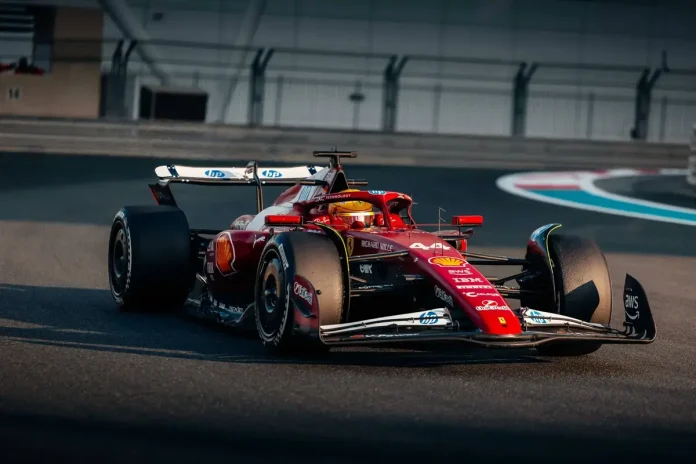
In a bold move that has sent shockwaves through the Formula 1 paddock, Ferrari has officially announced the unveiling of its highly anticipated 2026 F1 car on January 23. This development marks a significant turning point for the Scuderia, as they aim to shake off the burdensome limitations that plagued the underwhelming SF-25 last season. The SF-25 was Ferrari’s last ground-effect car, and with new technical regulations shaking up the landscape, the team is determined to seize this opportunity for a fresh start.
The upcoming regulatory changes represent the most profound overhaul in F1 since the introduction of the previous generation in 2022, and teams across the grid are diving headfirst into the challenge. Each constructor is pouring considerable resources into deciphering the revised regulations, all in a quest to uncover every performance advantage possible from the outset. However, this aggressive strategy is fraught with risks, as the fundamental nature of the changes necessitates a near-complete redesign. Teams are faced with the daunting task of starting with a blank canvas, carrying minimal knowledge from their existing machinery, and compounded by a reduced development timeline.
Ferrari’s team principal, Fred Vasseur, has confirmed a revolutionary two-stage development strategy that sets the Scuderia apart from its competitors. During a recent Christmas gathering in Maranello, Vasseur revealed that the car slated for launch will bear little resemblance to the version that will take to the track in Melbourne. The initial specification will primarily serve as a testing platform during the closed-door Barcelona sessions at the end of January. This early phase will focus on validating crucial elements such as packaging solutions, fluid dynamics, and electronic management systems for the new power units, rather than chasing outright performance.
The Barcelona specification is designed to be an on-track test bench, allowing Ferrari to examine fundamental systems without the pressure of performance metrics. As the team transitions to the Bahrain test sessions, the car will evolve toward a more refined specification, particularly in key aerodynamic areas. This strategic, progressive development approach enables Ferrari to learn from initial test runs while cautiously navigating technical uncertainties.
Among the critical design areas for the 2026 model, the nose section stands out as a focal point for all teams. With stricter safety requirements, including a mandatory two-stage crash test, and the introduction of active aerodynamics, teams must completely rethink this crucial element. Optimizing airflow towards the floor and sidepod inlets presents a significant challenge, especially as constructors pursue further miniaturization of radiators.
Ferrari’s final car specification may witness a dramatic shift in radiator positioning compared to the launch model. Such adjustments could facilitate a more aggressive narrowing of the rear section, leading to significantly improved airflow management. Furthermore, indications suggest a return to push-rod suspension layouts at both the front and rear, a strategic choice not stemming from failures in the SF-25’s previous configurations but instead from the theoretical benefits of enhanced internal component positioning. This shift could allow for a more pronounced narrowing of the lower chassis sections, resulting in a sleeker nose profile and tighter rear packaging while ensuring optimal airflow to the rear diffuser.
As Ferrari gears up for a thrilling season ahead, the stakes have never been higher. The team’s innovative approach to the 2026 F1 car not only reflects their ambition to reclaim their place at the top of the grid but also sets the stage for an exhilarating battle as all teams strive to adapt to the sweeping changes in the sport. The countdown to the launch is on, and the world is watching closely as Ferrari prepares to unveil its game-changing machine.