


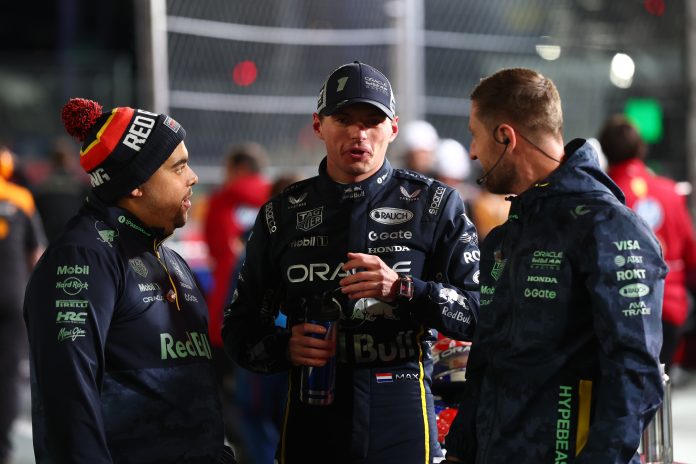
Max Verstappen, the four-time Formula 1 champion, has sparked a sensational debate in the racing world by boldly suggesting that if the regulations governing post-race inspections were to be overhauled, up to half of the teams currently competing could find themselves disqualified. In a sport where precision is paramount, the complexities of the FIA’s inspection process have come under intense scrutiny, particularly following this year’s series of random checks on selected cars that revealed significant gaps in enforcement.
Verstappen’s comments, reported by Italian outlet La Gazzetta dello Sport, shed light on a crucial aspect of the racing dynamic: “You’re always trying to find the limit; we all do it. Sometimes everything runs smoothly because you’re not always inspected. In my opinion, if the teams were inspected for every race, half of them would definitely be found to be in breach of regulations.” This statement not only underscores the inherent risks teams take to edge out their competitors but also highlights a troubling reality that could shake the foundations of the sport.
The Red Bull star’s criticisms go beyond mere opinion; they reflect a genuine concern about the consistency and reliability of the FIA’s checks. While he acknowledges the logistical challenges involved in examining every vehicle, he can’t help but point out the significant element of luck that plays into the current system. “Besides, it’s not possible to inspect every car; it would take a lot of people,” he remarked, hinting at the need for a more robust and thorough inspection framework.
Historically, the FIA has faced its share of controversies regarding disqualifications. In 2025, high-profile drivers such as Lewis Hamilton, Charles Leclerc, and Pierre Gasly, along with McLaren’s Lando Norris and Oscar Piastri, all faced the consequences of failing post-race checks. These events serve as a stark reminder of the razor-thin margins that separate success from failure in F1.
The recent Las Vegas Grand Prix further illustrated the stringent nature of these regulations when McLaren’s Norris and Piastri found themselves disqualified after their cars’ skids fell below the required threshold. The FIA’s proactive approach to ensure fairness by checking all top-ten finishers after the race, including Verstappen’s vehicle, demonstrates their commitment to maintaining integrity within the sport.
However, as the sport looks ahead to the new regulations set to be implemented for the 2026 championship, the question looms large: will Verstappen and his fellow competitors remain in favor of a system that could expose them to greater scrutiny? If the FIA manages to enhance its inspection capabilities, the balance of power within the grid might shift dramatically.
Verstappen’s insights not only reveal the intricate dance between performance and compliance but also ignite a crucial dialogue about the future of F1 regulations. As teams navigate this challenging landscape, the potential for upheaval remains ever-present, making for an exhilarating season ahead. The stakes have never been higher, and the implications of these discussions could redefine the very essence of competitive racing in Formula 1.