


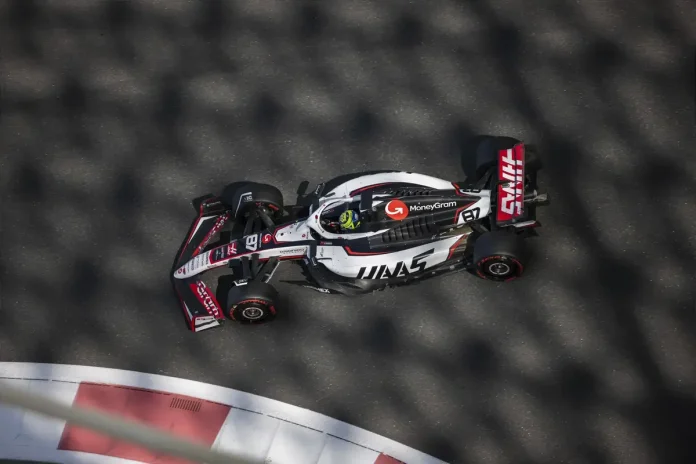
In a dramatic turn of events, the Haas F1 Team is at the center of a swirling storm of speculation following Toyota’s bold announcement of a partnership that could reshape the future of motorsport. Yet, amidst the buzz, Haas team principal has stepped forward to firmly quash rumors that Toyota is angling to become a full-fledged works team in Formula 1.
The partnership, which officially kicked off in late 2024, marks a significant multi-year technical collaboration between Haas and Toyota. With Toyota GAZOO Racing set to take on the role of title sponsor for the American team next season, the stakes have never been higher. Enthusiasts and industry insiders alike have begun to speculate whether this increased involvement could pave the way for a complete takeover of Haas. However, Komatsu, a key figure in the partnership, has made it abundantly clear that this is not Toyota’s endgame.
“I think it’s easy for many people to say that, because I think people want to say things like, ‘Toyota works team, Toyota is going to make engines,’” Komatsu emphasized to media outlets, including RacingNews365. This statement highlights the misconception surrounding the partnership’s intentions. He further explained that the collaboration is fundamentally about nurturing talent and fostering a competitive environment, rather than laying the groundwork for an engine manufacturing initiative or a direct takeover.
Komatsu elaborated on the unique advantages that Formula 1 offers for talent development. “If you look at F1 as an environment, if somebody wants to train people, or throw people into a very competitive environment, or an international environment, there’s nothing better than F1,” he stated. The intensity and rapid pace of F1 operations—where solutions that might take months in the corporate world can be accomplished in mere weeks—serve as a powerful training ground for the next generation of leaders.
He continued to articulate the broader vision behind the partnership, asserting that the knowledge and skills acquired through this collaboration will have far-reaching implications for Toyota. “In the long run, for Toyota Motor Corporation, it’s not just for the racing, the people they grow, train in this environment, will one day hopefully be a senior manager, or top management in the TMC, in the international mindset, competitive mindset,” he noted. This perspective challenges the prevailing narrative that focuses solely on the potential for Toyota’s entry as a powerhouse in F1.
Komatsu’s insistence that becoming a Toyota works team is “not the target” underscores a significant strategic pivot in how the relationship between Haas and Toyota is perceived. He acknowledges that inquiries about this potential direction are inevitable, yet he reiterates the core objective: cultivating an environment ripe for growth and innovation, rather than simply becoming another competitor on the grid.
As the F1 landscape continues to evolve, the Haas-Toyota partnership stands as a testament to the power of collaboration in the high-stakes world of motorsport. With a focus on human capital rather than mere corporate ambitions, this alliance could very well set new standards for how teams operate in the future, shifting the conversation from ownership and engines to talent development and competitive excellence. The motorsport community will undoubtedly be watching closely as this partnership unfolds, eager to see how it impacts both Haas and the wider Formula 1 ecosystem.