


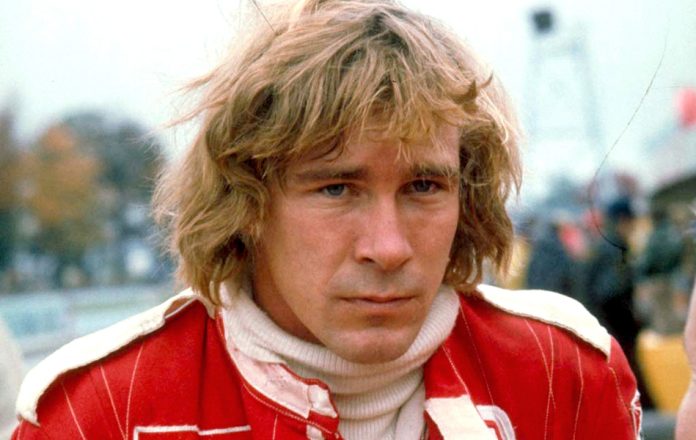
James Hunt was not just a name in Formula 1; he was a larger-than-life character who embodied the spirit of an era defined by rebellion and charisma. In today’s sanitized and uniform world, it can be hard to fathom how someone like Hunt, with his unruly blonde locks and a penchant for the extravagant, could rise to become a World Champion in the high-octane realm of motorsport. Born in Belmont, Surrey, to a stockbroker, Hunt was educated at the prestigious Wellington College, but it was his insatiable thirst for freedom that set him apart from the crowd.
Despite a privileged upbringing, Hunt’s rebellious nature defined his trajectory. It was sheer serendipity that led him to the thrilling world of racing at the age of 18, after attending a motorsport event. His motto? Live fast and spectacularly. With an impressive list of accidents to his name, he earned the cheeky moniker “James Shunt.” His tumultuous personal life was marked by two marriages—first to Susan Miller, who later became linked to the iconic Richard Burton, and then to Sarah Lomax, a horse trainer’s daughter who introduced him to the joy of keeping parrots. Ironically, his obsession with bird breeding led to the downfall of his second marriage, but it showcased the unpredictable nature of his life.
Beyond his personal escapades, Hunt’s professional journey was nothing short of remarkable. The 1970s were a vibrant playground for him, particularly in the glamorous Cote d’Azur, where he mingled with celebrities and indulged in a lifestyle filled with late nights and alcohol. His rise in Formula 1 was spearheaded by the eccentric Lord Hesketh, who squandered his family fortune on assembling a racing team and pursuing ambitious—and often failed—car designs.
Yet, Hunt’s undeniable talent shone through amidst the chaos. He grabbed attention for his blistering speed and a knack for wrecking chassis, culminating in a stunning victory at the Zandvoort circuit in 1975. The following year, he was thrust into the limelight as he stepped in for Emerson Fittipaldi at McLaren, a move that would change the course of his career. The 1976 season was a whirlwind, marked by a near-fatal crash involving Niki Lauda and an exhilarating six wins for Hunt, ultimately culminating in his crowning as World Champion.
However, the glory was fleeting. After his championship triumph, Hunt’s career began to wane, and by May 27, 1979, it ended in Monte Carlo. Yet, even after hanging up his racing helmet, Hunt remained a fixture in the world of motorsport. His insightful commentary for the BBC and Eurosport kept him connected to the sport he loved passionately. James Hunt may have left the racetracks, but his legacy as a flamboyant and fearless figure in Formula 1 endures, reminding us of a time when racing was as much about personality as it was about speed.