


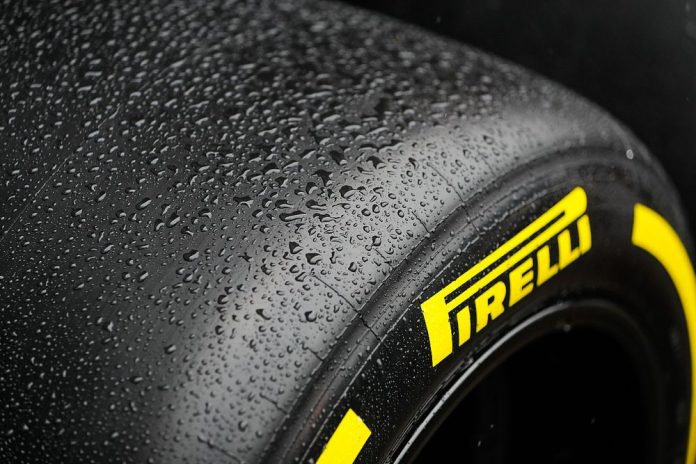
The 2025 Formula 1 season has emerged as a monumental showcase of Pirelli’s unparalleled expertise in tire technology, logistics, and strategic influence. Spanning five continents and 24 Grand Prix events, Pirelli’s P Zero tires have collectively traversed an astonishing 341,099 kilometers—equivalent to circling the globe eight and a half times. This season, marked by its intense demand and variety, has reaffirmed the critical role that the sole tire supplier plays in shaping the outcomes on the track.
From the initial free practice sessions in Melbourne to the dramatic final laps in Abu Dhabi, the sheer scale of this season is staggering. With a record-breaking 24 races, drivers completed 67,094 laps, utilizing slick tires for 64,519 of those laps while only resorting to wet tires in 2,578 instances. This highlights a consistent usage ratio of approximately 4% for wet-weather tires, underscoring the challenges posed by varying weather conditions throughout the season.
Strategic pit stops have become a tactical battleground, with teams making a total of 720 stops across the races. The Spanish Grand Prix set a benchmark with a dizzying 53 pit stops in Barcelona, while Miami saw the least action, with only 18. These statistics not only reflect tire wear and degradation but also the impact of diverse weekend formats and extreme temperature variations on tire performance.
Slick tires dominated the competitive landscape, accounting for 96% of the overall mileage. The use of six different tire compounds varied significantly by circuit and race strategy. Notably, the most utilized compounds included C3 with 93,493 kilometers, C4 at 91,595 kilometers, and C5 covering 66,255 kilometers. The remaining mileage comprised intermediate and extreme wet tires, accounting for just 4% of total distance traveled.
Individual performances were remarkable, especially Esteban Ocon’s extraordinary feat of completing 303 kilometers—49 laps—on a single set of C3 tires in Jeddah, showcasing exceptional tire management. Ocon also excelled in Baku, clocking 294 kilometers on C4s, while Pierre Gasly led with 251 kilometers on C2s in Shanghai. Lance Stroll managed an impressive 222 kilometers with C5s in Baku, and both Lando Norris and Nico Hülkenberg set a record of 194 kilometers on intermediates at Silverstone. The longest stint on full wet tires was recorded in Las Vegas, with 61 kilometers achieved in just 10 laps by two Aston Martins and Hülkenberg.
Pirelli’s logistical prowess was on full display, as the supplier provided teams with an astounding 6,120 sets of slick tires, distributed in various configurations including 1,800 sets of C5, 1,580 C4, 1,400 C3, and nearly 1,900 wet-weather tires. The allocation per car, which varies based on the weekend format, is meticulously regulated to ensure a uniform playing field across all teams.
The tire performance was significantly influenced by extreme temperature fluctuations throughout the season. The highest track temperature recorded was a blistering 58.2 °C during free practice in Jeddah, while the air temperature soared to 39.1 °C in Bahrain. Conversely, Las Vegas presented the coldest conditions with track temperatures dipping to 12 °C and ambient temperatures at 11.8 °C during qualifying. Melbourne also recorded notably chilly conditions with air temperatures hitting 14.3 °C.
As the dust settles on this record-breaking season, one thing is clear: the interplay between tire technology, strategic planning, and environmental factors has never been more critical in the high-stakes world of Formula 1 racing. The narrative of 2025 will be remembered as one of resilience, adaptation, and the sheer tenacity of teams and tires alike.