


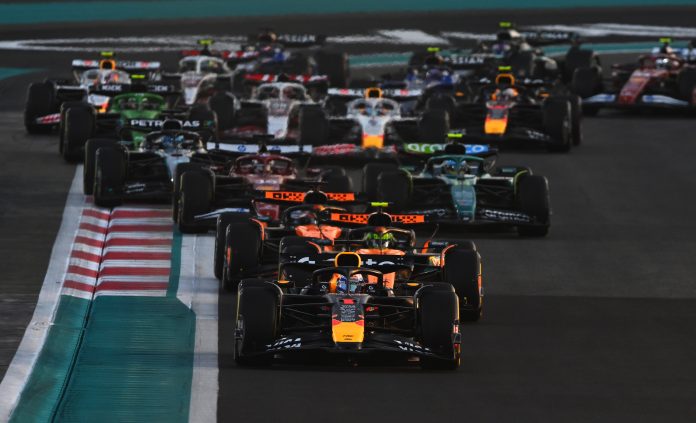
Red Bull Racing has taken an unexpected turn in its Formula 1 strategy, choosing to extend the development of its RB21 car well into the 2025 season. This decision comes after a realization that their ambitious project was not meeting the lofty expectations set by the team, especially in light of the intense competition they faced from McLaren, which surged midway through the previous season. The six-time Constructors’ Champion found itself grappling with a car that was failing to keep star driver Max Verstappen in the hunt for the Drivers’ Championship, a situation exacerbated by their developmental missteps.
The looming 2026 regulations reset added to the urgency of Red Bull’s situation, prompting rival teams to pivot their focus entirely toward new chassis and power unit rules. However, Red Bull, against the odds, committed to refining the RB21, determined to uncover the reasons behind its shortcomings. Following the British Grand Prix, Laurent Mekies stepped into the role of team principal, bringing fresh perspectives and methodologies that quickly began to yield results.
The introduction of an updated floor for Verstappen’s car at the Italian Grand Prix marked a pivotal moment in their season. This modification not only rejuvenated his performance but also ignited an impressive streak of six victories in the last nine races, drastically narrowing the gap to championship leader Oscar Piastri, who at one point had a staggering 104-point lead. Although re-establishing Verstappen’s title contention wasn’t the primary goal of the upgrades, it certainly became a thrilling byproduct of their deeper investigation into the team’s struggles.
In a recent media interaction, Mekies elaborated on this strategic approach, stating, “It became quite obvious to us that we didn’t want to simply turn the page and have wishful thinking that, whilst the ’25 car had not been at the required level to fight for the title, we would then be okay doing so in ’26.” He emphasized the importance of understanding the root causes of their performance issues, insisting, “We need to get to the bottom of this project,” a philosophy that could reshape their future.
Despite falling just two points shy of clinching a fifth consecutive Drivers’ Championship, with Verstappen outperforming his rivals by significant margins in the latter half of the season, Red Bull’s commitment to mastering the 2025 car leaves them better prepared for the uncertainties of the upcoming regulatory changes in 2026. The challenge ahead is formidable, likened to “scaling Mount Everest” by key figures in the paddock, including Toto Wolff himself.
With Honda moving on to a works arrangement with Aston Martin, Red Bull is set to embark on its journey as an independent power unit manufacturer, albeit in a technical partnership with Ford. This pivotal shift underscores the necessity of excelling in chassis and aerodynamic development for the Mekies-led team as they navigate this new era of competition.
Throughout the season, Verstappen has consistently highlighted the importance of their 2025 development efforts, a sentiment that Mekies shares. He notes the invaluable lessons learned regarding methodologies and performance enhancement, which will undoubtedly translate into the new regulatory framework. “Of course, there was a huge amount of learning,” Mekies stated, reflecting on the challenges they faced.
As Red Bull gears up for the future, Mekies believes their experiences have fortified team cohesion and spirit. “For once, to stay on the human aspect, certainly, it’s a group that, ultimately, whatever happens next, has achieved an unbelievable season,” he remarked, emphasizing the unity and resilience within the team. While he admits uncertainty about their car’s competitive edge relative to others, he expresses confidence in their operational strategies and collective mindset, ensuring they are poised to tackle whatever challenges lie ahead.