


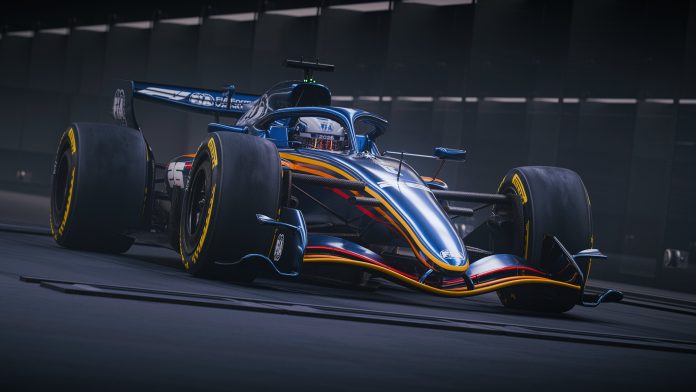
As the countdown to the thrilling 2026 Formula 1 season begins, a seismic shift is underway in the realm of racing terminology and car design. The FIA has unveiled an exciting blueprint that will redefine the dynamics of Formula 1, ushering in a new era of technology and strategy. With the first test set to unfold behind closed doors in Barcelona, anticipation is building around how these changes will impact the sport.
The FIA’s latest renderings reveal cars that embody not just aesthetic evolution, but groundbreaking engineering advancements. The upcoming generation will feature active aerodynamics, a more compact design with a wheelbase shortened by 200mm and a chassis that is 100mm narrower. Weight reduction is also a hot topic, with the minimum weight set at 770kg, although skepticism lingers among teams about the feasibility of this target during the initial year of the cycle.
Key innovations include refined sidepods and in-wash boards, crafted specifically to diminish dirty air—a critical goal of the revamped regulations. These changes are projected to slash overall drag by a staggering 40%, while downforce will drop between 15% to 30% compared to the previous models, fundamentally altering how teams approach race strategies.
The new Pirelli tires for 2026 will retain their 18-inch size, despite the FIA’s earlier inclination towards a smaller 16-inch option. However, the tires will be slightly narrower to contribute to the overall weight savings, a pivotal factor as teams adapt to these new constraints.
In a bid to simplify the experience for fans, the FIA has revamped its terminology as well. The complex jargon surrounding active aerodynamics has been streamlined to enhance clarity. The previously introduced X-mode and Z-mode are now a thing of the past, replaced with the more intuitive Straight Mode and Corner Mode. Drivers will engage in these modes depending on their position on the track, allowing for a more fluid and tactical racing experience.
The Overtake feature, formerly known as Manual Override Mode, will now serve as the key overtaking aid, allowing drivers to harness additional electric power rather than relying on the rear wing as with DRS. This strategic element will encourage overtakes in unexpected locations, though the tactical deployment of energy will become critical as all drivers will likely target the same high-stakes areas of the track.
Moreover, the introduction of Boost and Recharge modes will radically change how energy management is perceived. Boost Mode empowers drivers to deploy energy tactically while defending or attacking, creating a duel of wits and skill on the track. Recharge Mode, conversely, focuses on replenishing the battery, balancing the aggressive pursuit of speed with the necessity of sustainability.
As the FIA rolls out these changes, they have engaged directly with fans through so-called “fan focus groups,” ensuring that the new terminology resonates with both seasoned enthusiasts and newcomers alike. This commitment to fan engagement underscores a broader vision for Formula 1: to remain at the cutting edge of motorsport while fostering a deep connection with its audience.
With these monumental adjustments, the stage is set for what promises to be an electrifying season in 2026, one that could redefine how we understand the sport of Formula 1. Buckle up, as the race to the future is about to begin!