


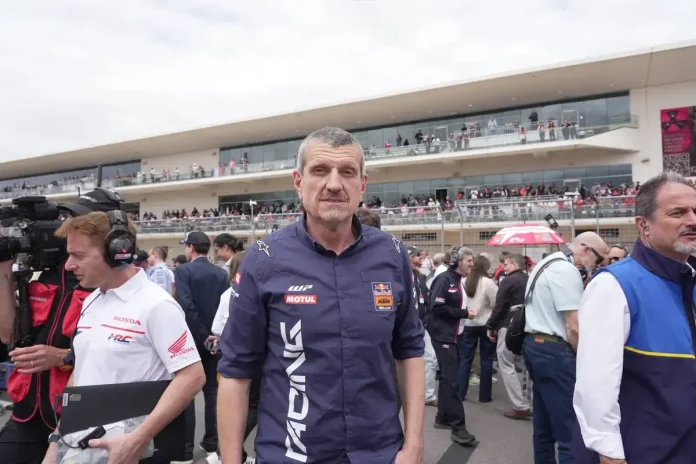
Günther Steiner, a name synonymous with the high-octane world of Formula 1 and a cult figure thanks to the hit series Drive to Survive, has shockingly plunged into the electrifying chaos of MotoGP, revealing a side of motorsport few truly comprehend. After years commanding the F1 paddock, the South Tyrolean mastermind has taken the helm at Tech3, plunging headfirst into a realm where speed and danger are dialed up to an almost surreal level. His verdict? MotoGP is not just a sport – it’s a breathtaking, heart-stopping spectacle that has redefined his understanding of competition.
Steiner admits that the intensity and competitiveness within MotoGP have left him utterly stunned. “I found one of the most exciting, if not the most exciting, sports in the world,” he declared in a candid interview. The fierce battles on two wheels have shattered any preconceived notions he once held. But what truly shook him was the revelation about the riders themselves – these men are not merely athletes; they are something otherworldly, almost superhuman.
“You have to be different to do what they do,” Steiner emphasized with unmistakable passion. “What these guys do on the bike is incredible. Everyone thinks they know how to ride a motorcycle, but what they do is not riding a motorcycle—it’s pushing these machines to an incredibly high level. You see it on TV, now imagine trying to replicate it: for me, it’s impossible for a human being.” The sheer physical and mental demands, the constant flirtation with disaster as they throw themselves into corners at unimaginable speeds, defy belief. “You see how many risks they take, how many times they fall, get up, and get back on the bike. You have to be special to do that.”
This raw admiration from Steiner goes beyond mere fan enthusiasm; it’s the insight of a seasoned team principal who is deeply involved in shaping the future of his squad. His journey is just beginning, and while his current relationship with KTM is stable, the road ahead remains uncertain. Speaking openly about his ambitions and the strategic planning underway, Steiner revealed a focused mindset: “I am very happy at the moment, but I still have a lot to learn. The first six months are for getting to know the people and this world. I enjoy coming to the races, but the riders can race without me. I am focused on organizing the team for the future, on what we will do from 2027 onwards.”
Steiner’s transition from the four wheels of Formula 1 to the two wheels of MotoGP is not just a career shift; it’s a revelation about the extraordinary nature of motorcycle racing and the exceptional breed of athletes who risk everything at blistering speeds. His candid remarks strip away any illusions about MotoGP, exposing it as a relentless battlefield where only the most exceptional can survive and thrive. For fans and newcomers alike, Steiner’s insights offer a gripping glimpse behind the scenes, promising that the coming years will see Tech3 evolve under his watchful, determined eye in a sport where the margin between glory and disaster is measured in milliseconds.