


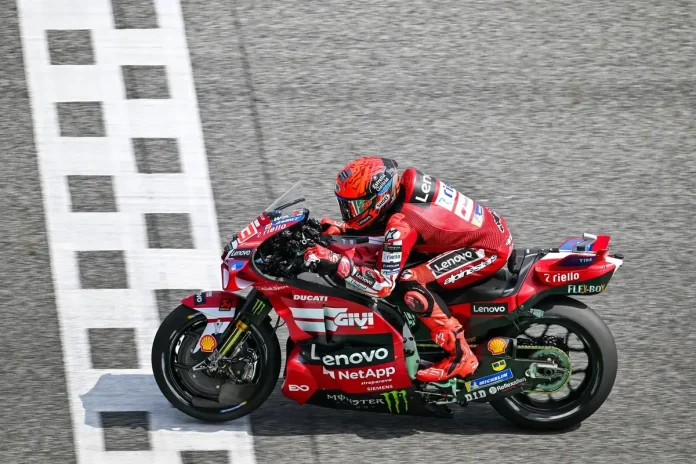
The excitement is palpable as the MotoGP circus returns to Brazil, bringing with it a wave of anticipation and strategic genius from Michelin. This weekend’s Brazilian Grand Prix is shaping up to be a thrilling spectacle, with tyre allocations that could shift the balance of power on the track, especially for Ducati, who are eager to bounce back from their recent struggles.
Michelin has unveiled a tyre strategy that promises to be more reminiscent of the successful configurations seen at the Red Bull Ring in Austria rather than the challenges faced in Buriram or Mandalika. After a disappointing Thai season-opener that saw Ducati’s remarkable streak of 88 podiums come to an abrupt halt, this new rear tyre allocation could offer a glimmer of hope. The company has opted for two rear tyre options featuring a reinforced casing identical to that used in Austria, which could play into Ducati’s hands, allowing them to regain their competitive edge.
The significance of the tyre selection cannot be overstated. Ducati’s performance at the previous races, particularly in Thailand, demonstrated the potential pitfalls of using tyres that do not suit their machine. The stiffer rear tyre in Thailand not only thwarted their strategies but also catapulted Aprilia to pole position and victory, showcasing the importance of tyre compatibility. Meanwhile, Marc Marquez and KTM’s Pedro Acosta had impressive outings at the Red Bull Ring last season, further underscoring the significance of this particular tyre configuration.
As the MotoGP paddock gears up for action at the Autodromo Internacional Ayrton Senna, the challenges of this new circuit loom large. Having not hosted a grand prix since the late ’80s, the venue has undergone significant upgrades, including a complete resurfacing, leaving teams and riders with no prior experience on this track. Michelin’s Piero Taramasso acknowledged the unique challenges posed by Goiania, emphasizing that preparation has relied heavily on simulation data due to the absence of any previous laps on this circuit.
“Goiania represents a completely new challenge for us,” Taramasso explained. “We have never raced there in MotoGP and we have not been able to organise any tests, so all our preparation relies on simulations. They show a very asymmetric circuit, with very high loads especially on the right-hand side.” This insight is crucial as teams strategize for optimal performance on race day.
In response to the complexities of the circuit, Michelin is bringing an extended tyre allocation, featuring three specifications at the front and rear that are specifically designed to handle the unique demands of Goiania. The rear tyres come equipped with a reinforced structure to better control temperature build-up, providing teams with more room to fine-tune their setups.
The stakes are high as riders who can quickly adapt to the racing lines and tyre behavior will likely have a significant advantage. With the MotoGP community buzzing with excitement, Friday’s practice sessions have been extended to compensate for the lack of testing, giving teams crucial time to prepare for what promises to be an exhilarating race.
As the engines roar and the riders take to the track, all eyes will be on Ducati to see if this strategic tyre allocation can help them reclaim their place at the forefront of MotoGP. The passionate Brazilian crowd is set to witness a high-octane showdown, and the atmosphere is electric with anticipation. This weekend, the stakes are not just about speed but also about strategy; who will emerge victorious in this new chapter of MotoGP history in Brazil?