


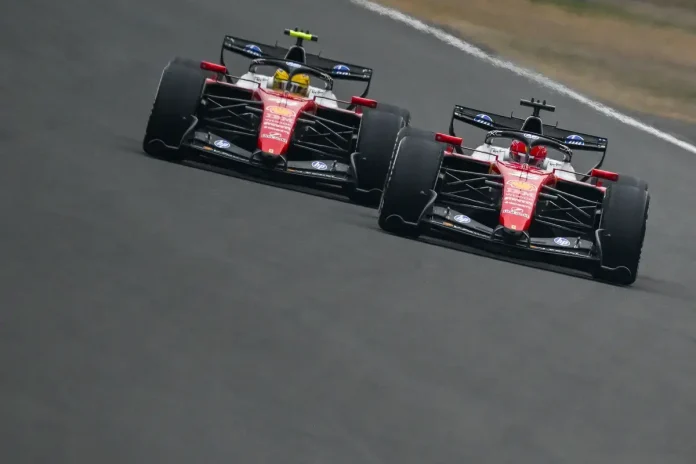
In a thrilling showdown that captivated Formula 1 fans, the gripping battle between Lewis Hamilton and Charles Leclerc at the Shanghai Grand Prix has ignited intense debate. As Hamilton clinched his first podium for Ferrari, many are left questioning the authenticity of the spectacle they witnessed, particularly regarding the use of energy management rules that govern modern racing. Sky Sports’ renowned commentator David Croft stepped into the fray, providing insights that challenge the narrative of energy dependency that has marred the perception of overtaking maneuvers.
Croft’s analysis of Hamilton’s impressive overtakes, especially at the notoriously challenging Turn 8, spotlighted a critical aspect of racing that goes beyond mere battery power. He passionately asserted, “There are some overtakes that are not assisted by the battery, that do not depend solely on the overtake mode,” emphasizing that Hamilton’s skill played a pivotal role in his triumph over Leclerc. This assertion raises intriguing questions about the true nature of racing prowess in an era where technology heavily influences performance.
The race in Shanghai showcased not only the intense rivalry between the two Ferrari drivers but also the strategic nuances that define modern F1 racing. Croft highlighted that Hamilton executed his overtakes in a manner that defied conventional wisdom, stating, “That is a point where you normally can’t overtake.” His remarks suggest that while drivers do utilize available technology, the essence of racing still lies in their talent and instincts behind the wheel.
As the debate rages on, Croft is calling for increased transparency in the sport, particularly regarding the graphical representations that accompany race broadcasts. “There’s the idea that everything we see is happening thanks to the battery, but that’s not always the case,” he argued. His plea for more comprehensive visuals aims to enhance the viewer experience, allowing fans to grasp the intricate dynamics at play during races governed by complex regulations.
This clash of titans has not only entertained but also provoked a necessary dialogue about the current state of Formula 1. In a sport that constantly evolves, the balance between human skill and technological assistance remains a hot topic, and the Shanghai Grand Prix has etched itself in history as a potent reminder of that delicate equilibrium. As fans reflect on the electrifying battle between Hamilton and Leclerc, one thing is certain: the drama of F1 is far from scripted, and the true test of a champion continues to unfold on the asphalt.