


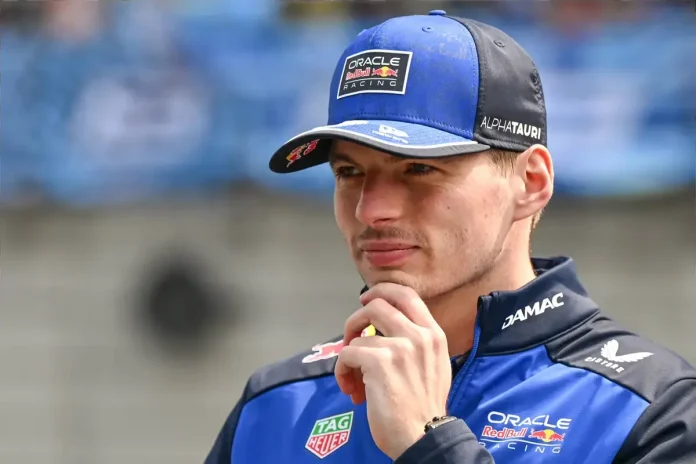
Max Verstappen, the fiery Dutch driver and four-time Formula 1 World Champion, has found himself in the crosshairs of criticism as he openly expresses his dissatisfaction with the sport’s new technical regulations. Former F1 team principal Guenther Steiner didn’t mince words, suggesting that Verstappen is “throwing his toys out of the pram” in response to the changes that have left many players in the paddock feeling uneasy.
Verstappen’s frustration has been palpable since the onset of the season. He famously likened the current cars to “Formula E on steroids,” voicing his discontent even before the first race. His struggles were evident in recent races, where he finished a disappointing sixth in Melbourne and failed to finish in China. These results have only amplified his vocal protests against the new rules, which require drivers to manage energy more meticulously with the introduction of hybrid power units.
The regulatory changes have not just impacted Verstappen; they have sent ripples through the entire field. Drivers now grapple with the challenge of harvesting energy from the new 50-50 hybrid systems, leading to increased lap times and generating a debate about the legitimacy of overtaking maneuvers. Many fans and pundits alike have raised eyebrows, questioning whether the racing still showcases true driver skill or if it has become too dependent on the technology.
Steiner weighed in on the situation, noting that despite Red Bull’s groundbreaking efforts with their first in-house power unit developed in partnership with Ford, Verstappen’s discontent stems from performance disappointments. “Max is not happy because his car is not where he likes it to be,” Steiner explained. He also pointed out that the advanced technology involved requires time for adaptation. “It’s such an advanced technology, so it takes some time for the engineers to get used to it,” he added.
Yet, Steiner remains optimistic about the new regulations, suggesting that they will evolve positively as teams continue to adapt. He defended the changes, stating, “The racing was pretty good,” and acknowledged that while Verstappen’s aversion to change is understandable, it does not reflect the overall excitement of the competition. “He’s not used to not being in one of the best cars, so that doesn’t help his mood to like the new regulations,” he noted.
The early stages of races have indeed ignited excitement, with a variety of teams battling for supremacy at the start. However, the enduring nature of the criticism surrounding these new rules remains uncertain, especially as the season progresses and teams confront various track challenges. As the drivers navigate this new landscape, the question looms: will Verstappen adapt to the shifting dynamics, or will his frustrations continue to bubble over? The unfolding saga promises to be as gripping as any race on the calendar.