


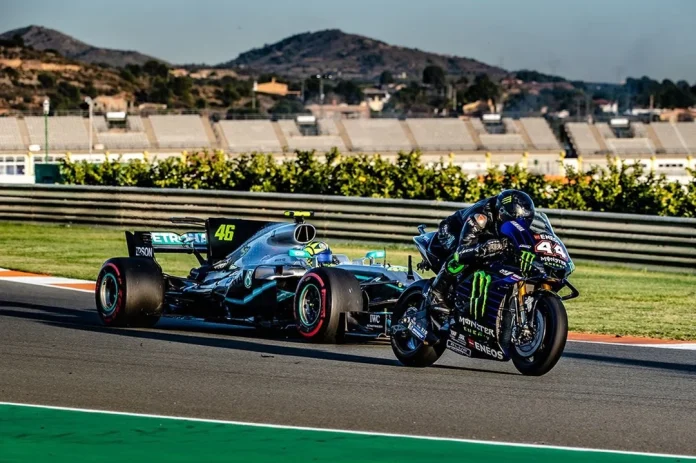
The thrilling race for the championship title in motorsport is often a nail-biter, but what if the scoring systems of Formula 1 and MotoGP were swapped? This intriguing question opens a debate on how different rules could have altered the outcomes of recent seasons. Imagine a scenario where McLaren, a team with a storied history, would have benefited from additional team orders under a different points system.
In recent years, the structure of race weekends in both Formula 1 and MotoGP has undergone a remarkable transformation, largely due to the introduction of Sprint races. In MotoGP, these shorter Saturday races are now a staple at every event, effectively doubling the number of opportunities for riders to battle it out on the track. Meanwhile, F1 has taken a more reserved approach since launching Sprint races in 2021, with only six such events scheduled for the current 24-race season. However, the anticipation is building as F1 CEO Stefano Domenicali has confirmed plans to expand the number of Sprint races to as many as 12 by 2027.
The contrasting points systems between the two motorsport giants add yet another layer of complexity to this discussion. In both championships, a victory nets 25 points, but the distribution diverges significantly after that. Formula 1 awards points to the top ten finishers, while MotoGP extends its scoring to the top fifteen, providing a wider safety net for competitors.
When it comes to Sprint races, the divergence becomes even more pronounced. F1 grants points only to the top eight finishers, with a decreasing scale starting from 8 points down to 1 for eighth place. In contrast, MotoGP’s Sprint format rewards the top nine, with the winner earning a substantial 12 points, the runner-up receiving 9, and third place garnering 7. This scoring system incentivizes aggressive racing throughout the field, ensuring that even lower positions can still contribute to the overall championship chase.
These differences raise questions about strategy and team dynamics. Could McLaren have clinched a few more victories with a more favorable points structure? Would the pressure on drivers and teams have shifted, potentially impacting their performances? The debate is not just about numbers but about the very essence of racing—strategy, aggression, and the fight for glory on the track.
As fans and analysts dissect these possibilities, one thing is certain: the excitement of both F1 and MotoGP continues to captivate audiences around the world. The potential for change and the allure of competition keep the spirit of motorsport alive, promising thrilling narratives and unforgettable moments for years to come.