


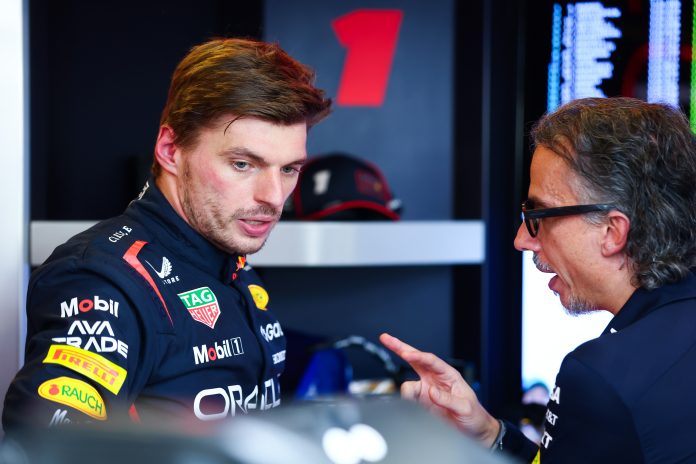
Max Verstappen’s team principal, Laurent Mekies, has dropped a bombshell that could shake the foundations of Formula 1 as we know it. In a candid revelation, he admitted that Red Bull is trailing behind its rivals as the motorsport world gears up for the 2026 season. This unsettling news comes on the heels of rival team Ferrari’s bold decision to pivot entirely away from the 2025 season early last April, redirecting their focus towards the new 2026 regulations. Meanwhile, Red Bull opted to push the limits of last year’s car, continuing its development into the summer break—a choice that has now sparked considerable debate among fans and experts alike.
Mekies defended this controversial strategy in an interview with Motorsport.com, asserting that Red Bull’s approach was both calculated and necessary. “It became very clear to us that we didn’t want to simply turn the page and, despite the 2025 car not being good enough, rely on the desire to perform well in 2026 anyway. We didn’t want to go down that path,” Mekies stated, emphasizing the importance of understanding the shortcomings of their current project. He highlighted that the same tools, processes, and methodologies will be employed next year, despite the overhaul of regulations.
While acknowledging that time may have been lost for the 2026 project, Mekies remained resolute: “So, to answer the question of whether this was a difficult choice? No, not at all. To be honest, it was something we were convinced of from the start.” His confidence raises the stakes for Red Bull, which must now prove that their gamble will pay off in the long run.
Mekies elaborated on the implications of this decision, extending beyond mere car performance. He pointed out the necessity of continuing development in 2025 to strengthen the team dynamics and enhance their collaborative efforts for the upcoming season. “We learned a lot. First of all, it’s about the methodology we use: what do you need to make a car faster and what do you need to overcome certain limitations,” he explained. This focus on teamwork and methodology is critical as Red Bull navigates the complexities of a new era in F1.
The human aspect of this strategy has not gone unnoticed. Mekies noted that the decision has fostered a sense of unity within the team, paving the way for a positive atmosphere as they approach the challenges of 2026. However, in a stark admission, he conceded, “As a result, do we think our car will be faster than the competitors’? No, honestly not.” This honesty is refreshing yet alarming, as it casts doubt on Red Bull’s immediate competitiveness against formidable adversaries.
The ramifications of delaying work on the 2026 car could be profound, especially considering the future of Verstappen. The four-time world champion has made it clear that he remains committed to Red Bull for the 2026 season. However, the looming specter of uncompetitiveness raises a critical question: will Verstappen remain loyal if the team struggles? With heavyweights like Mercedes and Aston Martin potentially vying for his signature in 2027, Red Bull is under intense pressure to reverse its fortunes.
As the 2026 season approaches, the motorsport community watches with bated breath. Will Red Bull’s gamble on methodical development and team cohesion bear fruit, or will they find themselves on the back foot, struggling to keep pace with their rivals? The coming months will be pivotal, and the clock is ticking.