


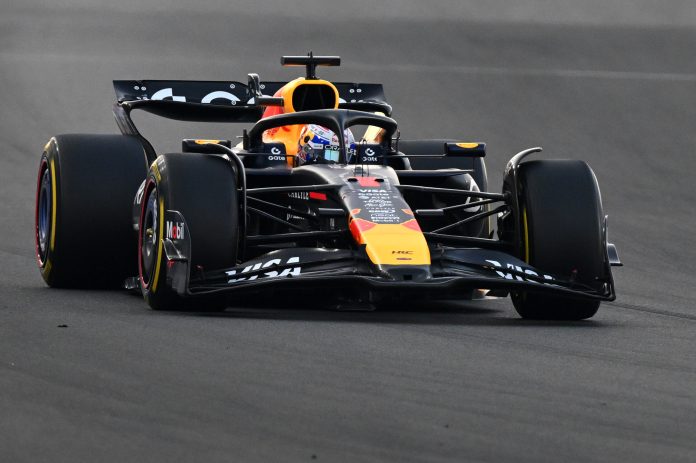
In a bold strategic move, Red Bull Racing has made waves in the motorsport world by delaying the development of its 2026 Formula 1 car. Team principal Laurent Mekies has opened up about this unconventional decision, which comes on the heels of a rollercoaster 2025 season that saw the team rise from the ashes of low expectations.
At the onset of the 2025 season, Red Bull found itself battling under a cloud of doubt, while rivals McLaren surged ahead, dominating the early stages. However, a transformative shift occurred later in the season when Mekies took over from Christian Horner. Armed with an innovative approach and a series of strategic upgrades, Max Verstappen defied the odds, clawing back a significant points deficit to challenge for the championship in a nail-biting finale. Ultimately, he fell just two points short of clinching the title, showcasing Red Bull’s resilience and determination.
Unlike Ferrari, which abandoned its SF-25 development as early as April, Mekies emphasized that Red Bull took a markedly different path. “It became quite obvious to us that we didn’t want to simply turn the page and have wishful thinking that, whilst the ’25 car had not been at the required level to fight for the title, we would then be okay doing so in ’26,” he stated, underscoring the team’s commitment to deepening their understanding of the RB21’s performance.
Red Bull’s philosophy centers on thorough analysis and continuous improvement rather than blind optimism. Mekies explained that the team preferred not to chase after false hopes. Instead, they prioritized getting to the core of their issues with the current car, acknowledging that the same methodologies and tools would be used in 2026. While this approach might cost them valuable time in terms of development, the long-term benefits could prove invaluable.
As the team prepares for the monumental shift to an in-house power unit developed in partnership with Ford, one might assume that their late start on the 2026 car could spell disaster. However, Mekies is confident that the lessons learned from the 2025 season will bolster their performance for the upcoming year. “Of course, there was a huge amount of learning,” he remarked, emphasizing the critical insights gained regarding car performance, tire management, and overall methodologies.
The human element also plays a crucial role in Mekies’ outlook. He believes that the challenges faced have only served to strengthen the team’s cohesion and resolve. “Whatever happens next, has achieved an unbelievable season,” he noted, highlighting the unity and energy that will propel them into the new season.
The question remains: will this calculated risk pay off when the lights go out in Melbourne? While Mekies admits that he cannot predict whether their car will be faster or slower than the competition, he is optimistic about the team’s spirit and commitment to overcoming challenges. As Red Bull Racing gears up for the future, all eyes will be on how they leverage their hard-earned insights to reclaim their place at the forefront of Formula 1.