


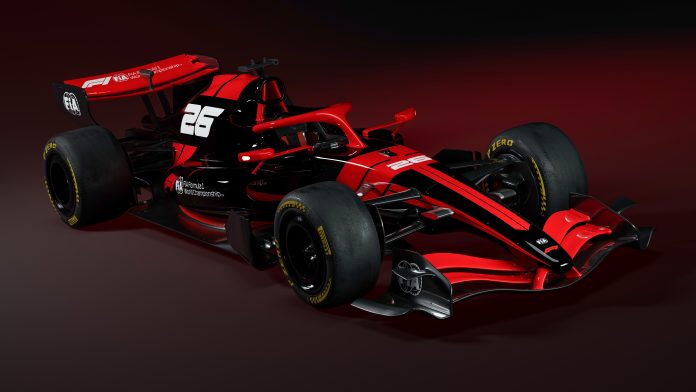
The landscape of Formula 1 is set to undergo a seismic shift in 2026, as the FIA prepares to implement sweeping regulations that could redefine competitiveness in the sport. As the teams and governing body brace for this transformation, anticipation is mounting over how these changes will affect the balance of power on the grid. The FIA’s latest insights suggest that while the initial gaps between teams might be more pronounced than last season, strategic interventions have been planned to ensure that the field converges over time.
Historically, major rule changes have led to dramatic disparities in performance, with previous eras demonstrating how one team can monopolize success. The hybrid era, for instance, saw Mercedes dominate after rolling out a groundbreaking power unit, locking in their supremacy for years. However, with the upcoming reset, the FIA has learned from past mistakes, introducing crucial mechanisms designed to prevent a repeat of that scenario.
A pivotal component of this new approach is the introduction of the ADUO system, which will monitor the power output of internal combustion engines every six races. Teams falling within a 2% to 4% deficit compared to the strongest engine will be granted one additional upgrade, while those lagging more than 4% will receive two. This proactive measure aims to keep competition alive and foster an environment where innovation can flourish.
The overhaul extends beyond just the power units; it encompasses a complete technical reset. With new engine regulations, revamped chassis rules featuring active aerodynamics, and a commitment to fully sustainable fuels, the stage is set for a fresh competitive atmosphere. FIA’s single-seater director, Nikolas Tombazis, shared his thoughts, indicating that while the engine performance will be the initial key differentiator, the convergence of teams is expected to occur as they adapt to the new standards.
Tombazis emphasized that the initial phase may yield a wider spread of performance, reminiscent of the varied sidepod concepts seen in 2022. Teams like Red Bull, Ferrari, and Mercedes showcased distinct designs that ultimately evolved toward a more unified solution. With the 2026 regulations, he anticipates a similar trajectory, stating, “Naturally, there will be some solutions that are better and some that are worse. There will be some initial convergence, I guess, over the first six months or one year.”
Looking ahead, the FIA’s predictions are twofold. Initially, the gaps are expected to be larger than what fans witnessed in the previous season, but if the new regulations function as intended, the long-term outlook is optimistic. Tombazis articulated this balance, indicating, “For 2026, I would not expect to have the grid quite as close as what we had last year. But I would expect that the converged grid [later on] is closer than what it was in 2025.”
Adding to the intrigue, Pirelli has noted significant variations in downforce simulations from different teams. However, their recent evaluations revealed a narrowing of predictions as teams prepare for the 2026 season. Tombazis expressed cautious optimism but underscored the limitations of current data: “Initially, I think there may be some variation, but we are pretty sure that the converged performance should lead to a smaller [more compact] grid.”
Importantly, Tombazis stressed that the true measure of excitement in Formula 1 does not hinge solely on the performance gap between the fastest and slowest teams. “What determines the closeness of the grid is not necessarily the gap between the first and the last,” he pointed out. Instead, it’s the competitive nature of the teams vying for points and victories that truly captivates fans. With the promise of a closely contested midfield battle, the FIA is setting the stage for a thrilling championship ahead.
As F1 gears up for this pivotal season, one thing is clear: the 2026 regulations could not only reshape the competitive landscape but also redefine what it means to be successful in the world of Formula 1. Fans and teams alike are poised for an exhilarating journey into uncharted territory.