


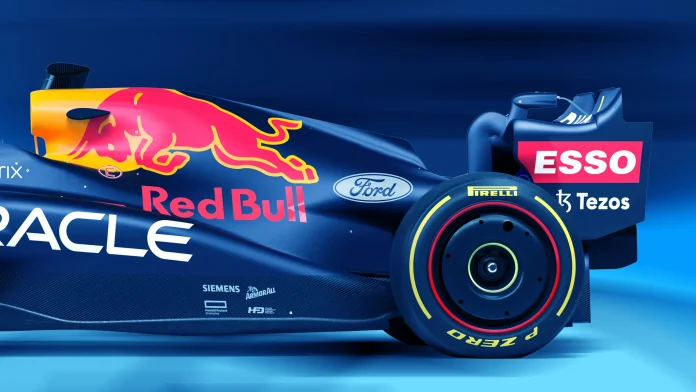
In a groundbreaking revelation that could reshape the landscape of Formula 1, Ford Motorsport’s global director, Mark Rushbrook, has disclosed a significant shift in the automotive giant’s approach to their partnership with Red Bull Racing. As the 2026 season approaches, a new chapter begins with Red Bull Powertrains stepping into the spotlight to develop their own power units, marking the end of a highly fruitful collaboration with Honda that spanned from 2018 to 2025. This strategic pivot, first hinted at back in 2021, underscores not only a transformation in Red Bull’s operational strategy but also a bold move towards independence in the fiercely competitive F1 arena.
Rushbrook’s insights reveal that Ford’s involvement has evolved dramatically, taking on a more substantial role in the power unit’s construction than initially envisioned. “The original list was focused on the electrification part of it: the battery cell, the motor, the inverter, the software, and the calibration board,” he explained, indicating that the early focus revolved primarily around electrification. However, as the collaboration progressed, it became clear that the combustion engine’s development was crucial. “What we didn’t expect, and what wasn’t a priority for us initially, was the combustion engine,” he noted, highlighting a pivotal change in strategy as Ford’s own road car plans evolved.
This shift in focus is particularly noteworthy as Ford now recognizes the importance of integrating traditional internal combustion engine technology alongside their electric innovations. Rushbrook elaborated, “As we were working on the electric part of it… we saw an opportunity to participate and contribute.” The collaboration has enabled Ford to play an integral role in developing components for the combustion engine, with parts being manufactured daily at their facilities in Dearborn and shipped out for the Red Bull project.
The implications of these developments extend far beyond just Red Bull and Ford. The new regulations governing F1 power units are set to usher in a fresh era, maintaining the 1.6-litre V6 turbo hybrid format while significantly altering the balance of power sources. The output from the internal combustion engine will be reduced, while electrical power will be tripled, creating a 50-50 distribution between the two. This evolution in engine technology also means that the Energy Recovery System (ERS) will now have the capacity to recharge the battery with double the energy per lap, as F1 bids farewell to the MGU-H component.
Sustainability has emerged as a cornerstone of these changes, aligning with Formula 1’s ambitious goal of achieving net-zero carbon emissions by 2030. The introduction of advanced sustainable fuels, which have already been tested in lower-tier series like F2 and F3, will play a crucial role in this green initiative. These fuels are crafted from innovative sources such as carbon capture, municipal waste, and non-food biomass, ensuring compliance with stringent environmental regulations.
The allure of these new power unit regulations has attracted heavyweight manufacturers, including Ford, Audi, and the impending entry of General Motors, set to power the Cadillac team starting in 2028. As the automotive landscape continues to evolve, the stakes have never been higher, and all eyes will be on Red Bull and Ford as they embark on this ambitious journey into the future of Formula 1 racing.