


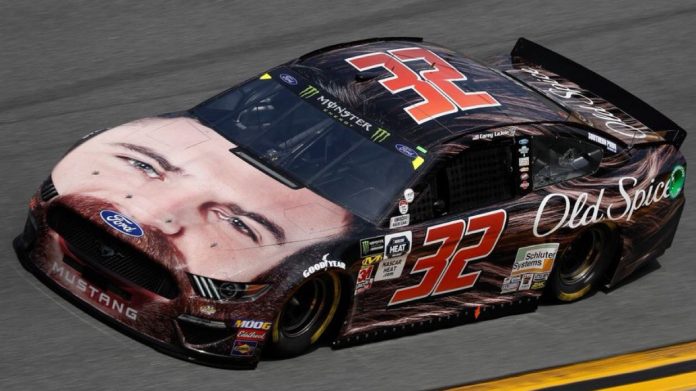
For decades, Ford has been an indomitable force in the world of NASCAR, celebrated for its legendary victories and a storied lineup of teams that shaped the very fabric of stock car racing. Yet, beneath the surface of this powerhouse, troubling signs are emerging—signs that indicate a significant structural unraveling within the Ford camp. This isn’t merely a case of a few bad seasons; it’s a stark warning of a deeper crisis brewing in the garage.
As teams begin to drift away and alliances grow increasingly tenuous, the landscape appears more precarious than ever. While competitors are consolidating their grip on the sport and laying down clearer pathways for future success, Ford’s network seems alarmingly fragile. The alarm bells may not be blaring yet, but they are definitely ringing. It’s time to delve into the heart of the matter.
The most glaring indicator of Ford’s trouble is the stark decline in the number of teams fielded in NASCAR’s national series. In 2025, Ford began the season with six full-time teams in the Cup Series, including heavyweights like Team Penske, RFK Racing, Front Row Motorsports, and Wood Brothers. However, a shocking post-season shakeup revealed a drastic reduction in representation. The Haas Factory Team has made the switch to Chevrolet, and Rick Ware Racing will follow suit in 2026. This leaves Ford with just four teams—compared to Chevrolet’s eight and Toyota’s three—signifying a worrying trend.
The decline isn’t limited to the Cup Series. The Xfinity Series has also felt the repercussions, albeit with a glimmer of hope as Sigma Performance Services confirmed their commitment to the Ford Mustang for the upcoming season. Yet, the dwindling number of teams is critical in today’s NASCAR, where more entries translate to increased manufacturer points, better prize money, and valuable data for research and development. A reduced presence diminishes Ford’s influence in rule-making and hampers its ability to adapt to the evolving Next Gen cars. Without a strategic intervention, such as charter incentives or OEM mandates, Ford risks spiraling into irrelevance.
The crux of Ford’s issue lies in its absence of a cohesive manufacturer system. In the current NASCAR ecosystem, a robust manufacturer system is essential for success. It involves coordinated technical alliances, data sharing, and a well-defined driver development pipeline that facilitates seamless progression through the ranks of racing series. Unlike its competitors, Ford operates on a loose framework heavily reliant on elite partnerships with a few teams, such as Team Penske and RFK Racing. This fragmented approach leaves mid-tier teams feeling neglected and under-resourced.
In stark contrast, Chevrolet boasts a structured network led by Hendrick Motorsports, which forms alliances that pool resources and data across multiple teams, fostering a culture of innovation and success. Toyota, too, ensures a tightly controlled progression through Joe Gibbs Racing and 23XI, establishing a clear path for talent from Trucks all the way to Cup stardom. Ford’s dependency on a select few teams not only exposes its vulnerabilities but also accelerates the exodus of teams seeking more stability and support.
The implications of this are dire. Modern teams expect more than just cars; they demand a long-term vision from their manufacturers, one that aligns with their aspirations for growth and competitive stability. The instability stemming from Ford’s eroding presence signals a lack of confidence. Mid-tier teams like Haas Factory Team and Rick Ware Racing see little hope for contention without consistent performance, prompting them to explore the more established ecosystems offered by Chevrolet and Toyota.
This trend creates a compounding effect: each team’s departure diminishes Ford’s revenue from manufacturer points, limits research and development capabilities, and weakens its influence in the garage. The remaining Ford teams are now caught in a precarious balancing act, weighing loyalty against the need for survival, further isolating Ford in the NASCAR landscape.
The pressure is mounting on Ford’s flagship teams, such as Team Penske and RFK Racing. As the number of teams dwindles, these top squads are left to shoulder an overwhelming burden of development. With fewer entries generating vital data, Team Penske faces the daunting task of leading aero testing and engine modifications on its own, diverting precious resources away from the pursuit of race victories. RFK Racing, already stretched thin, is under heightened scrutiny as performance falters.
The stakes have never been higher for Ford. They stand at a crucial crossroads, where decisive action is imperative to reverse the trend of team departures. If Ford can reclaim its footing and build a robust manufacturer system, it can maintain parity in the competitive landscape. However, failure to act risks diminishing its influence in NASCAR, potentially relegating it to the status of a third-tier manufacturer.
To turn the tide, Ford must invest strategically in fostering a centralized system of alliances, ensuring mandatory data sharing and offering incentives that can attract mid-tier teams. Mirroring the successful structures of Chevrolet and Toyota is essential to rebuild the necessary scale before the situation deteriorates further.
In conclusion, Ford’s struggles stem from a lack of organizational cohesion rather than any inherent weakness of the brand itself. The success of Chevrolet and Toyota lies in their structured systems rather than superior engineering. Ford has the potential to rise again, as demonstrated by Penske’s historical prowess. The urgency now lies in unifying efforts to prevent further defections. NASCAR thrives on having three strong manufacturers, and with bold leadership, Ford can reclaim its legacy and foster a competitive environment that excites fans and elevates the sport. The time to act is now—before the garage turns exclusively blue and red, tipping the balance of power in NASCAR irreversibly.