


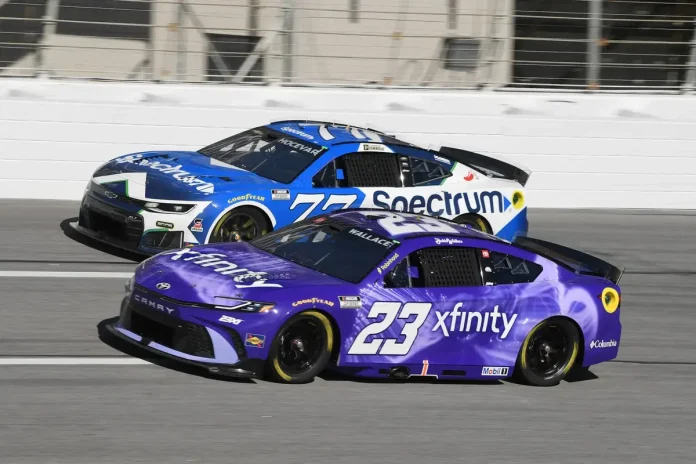
Carson Hocevar is not one to shy away from controversy, and his recent comments about Joe Gibbs Racing (JGR) have sent shockwaves through the NASCAR community. The rising star of Spire Motorsports has effectively thrust himself into the spotlight amid a brewing legal storm between JGR and former employee Chris Gabehart, who now leads the competition at Spire. This lawsuit has escalated tensions, as JGR accuses Gabehart of mishandling sensitive information that could tilt the competitive balance in the NASCAR world.
In a bold move on social media, Hocevar took a dig at JGR’s decision to hire a private investigator to surveil Gabehart. “They needed a PI for this? They could’ve just walked next door. That’s known as ‘Jeff’s table,’” he quipped, referring to a well-known meeting spot in the NASCAR garage. This comment not only highlights the close-knit nature of the racing community but also suggests that Gabehart’s discussions with Spire’s owner, Jeff Dickerson, were hardly clandestine.
The legal drama unfolded as JGR initiated a lawsuit against Gabehart, asserting that he had unlawfully acquired confidential competition data during his transition to Spire. The stakes are high, with JGR scrambling to determine if any proprietary information was compromised when Gabehart joined the rival team. The organization has expressed urgency in gathering evidence, which they believe is essential to their case.
In a shocking revelation filed in court, it was disclosed that JGR had enlisted the services of North Carolina-based private investigator Ryan Simpson from Barefoot Private Investigation. His surveillance documented Gabehart’s movements after he left JGR, specifically noting a December 2 encounter at the Spire facility. Simpson’s detailed timeline revealed that Gabehart and Dickerson spent substantial time together, including over an hour at a local restaurant, which he captured through video and still images.
Hocevar’s light-hearted jab at the situation underscores a deeper narrative; the NASCAR community thrives on inside knowledge and maintains a tight grip on information flow. His remarks have not only entertained fans but also provided a glimpse into the ongoing farce that is unfolding in the background of the sport.
But the legal implications are serious. To bolster their claims, JGR has submitted affidavits from key figures in the NASCAR world, including driver Denny Hamlin and team competition director Wally Brown. In his statement, Hamlin emphasized the critical nature of the information Gabehart allegedly retained, calling it the “crown jewels” of JGR’s operations. With a history of collaboration that led to significant successes, Hamlin’s words carry weight, especially given the sensitive nature of the data involved.
Gabehart’s departure from JGR was not just a simple career move; it opened the floodgates to questions about competitive integrity. His previous role as a crew chief had granted him access to vital information regarding JGR’s strategies and technologies, and now that data is at the core of a staggering $8 million lawsuit.
As the legal battle intensifies, the implications of this case could reverberate throughout the NASCAR garage, shaping the future of competition in the sport. If the allegations hold water, it could redefine the way teams handle proprietary information and interactions with former employees.
Hocevar’s playful remarks may lighten the mood, but they also reflect a critical moment in NASCAR history, where legal battles and competitive spirit intertwine in a high-stakes game. The developments of this case will be closely watched, as they carry the potential to impact not just the parties involved, but the entire landscape of NASCAR racing.