


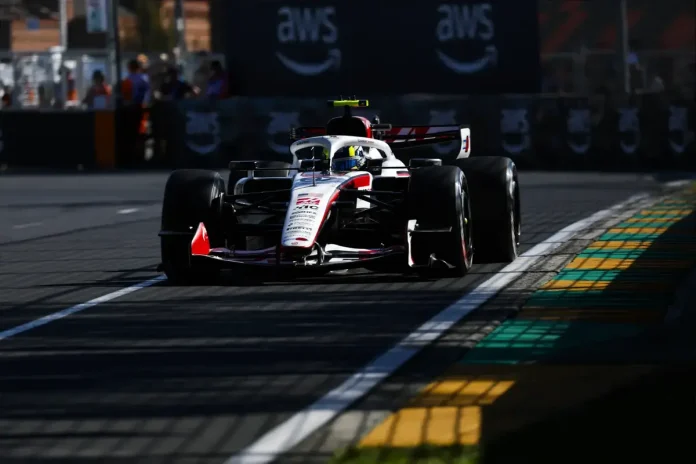
At the Formula 1 Australian Grand Prix, Haas drivers Esteban Ocon and Oliver Bearman have ignited a storm of intrigue with starkly contrasting evaluations of the new 2026 cars. While pre-season testing in Bahrain hinted at promise, with the VF-26 emerging as a contender for the fifth fastest car, the reality in Australia has proven far less optimistic. Both drivers found themselves struggling to break into the top ten during Friday’s practice sessions, signaling that significant hurdles await the American team.
The debate over the drivability of these new machines has become a hot topic, with Ocon expressing his concerns about the overwhelming amount of data and complexity drivers face. “There’s a lot going on,” Ocon divulged to the media. “To be honest, my head is going to explode right now with how much information there is.” His candid remarks underscore the challenges of adapting to a car that demands a fine balance and meticulous attention to detail. Ocon emphasized that while the car’s balance has been inconsistent, he remains focused on the basics, urging the team not to lose sight of fundamental preparations for race weekend.
In a more optimistic tone, Ocon acknowledged that the team was not far from achieving a competitive result. “Luckily, our car feels ok in terms of balance,” he noted, hinting at a more favorable situation compared to last year’s model. This year, he feels there is more flexibility to refine performance. However, he also stressed the crucial need for optimization, particularly regarding energy delivery, which remains a significant area for improvement. Ocon maintained a hopeful outlook, highlighting the favorable weather conditions and the necessity to remain patient as the team continues to navigate the complexities of the season.
In stark contrast, Oliver Bearman’s perspective on the new cars was refreshingly straightforward. He suggested that much of the car’s performance is dictated by its sophisticated software. “I think so, but by the same token, a lot of it does it itself, if you know what I mean,” Bearman explained. His remarks reveal a belief that while drivers play a role, the technological advancements in the cars may overshadow their individual contributions. Bearman praised Ferrari’s engineering efforts, asserting that the team’s understanding of the power unit strategy is trustworthy, yet he cautioned that drivers must establish a consistent driving style to maximize the software’s capabilities.
As the Haas team grapples with these diverging views from its drivers, the uncertainty of their standing in the competitive hierarchy of Formula 1 looms large. With Ocon’s cautious optimism and Bearman’s more detached assessment, the dynamics within the team could shape their strategies moving forward. As the season unfolds, all eyes will be on Haas to see if they can reconcile these differences and harness the full potential of their new machinery. The excitement surrounding the 2026 season continues to build, and fans are eager to witness how these developments will play out on the track.