


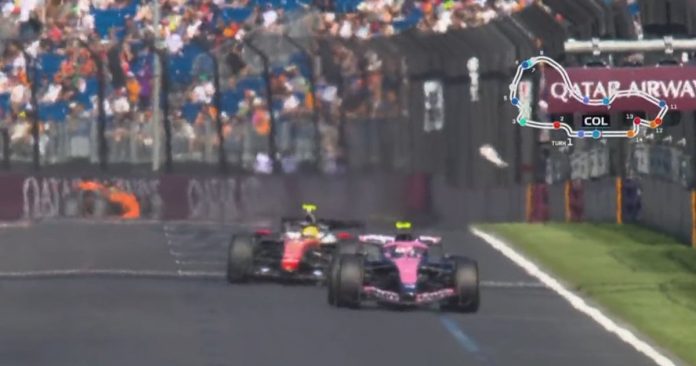
In a shocking turn of events during the second practice session of the Australian Grand Prix, Lewis Hamilton narrowly escaped what could have been a catastrophic crash. As he thundered down the start-finish straight, the seven-time world champion found himself face-to-face with a precariously slow-moving vehicle driven by Franco Colapinto.
Colapinto, struggling with a significant gear issue, failed to vacate the racing line after rounding the final corner. Instead of steering off to the side, he remained stationary, creating a perilous situation for Hamilton, who had mere moments to react. With lightning reflexes, Hamilton swerved just in time, dodging a potential disaster that could have derailed his entire race weekend.
Over the team radio, Hamilton expressed his disbelief, exclaiming, “Ah, there was a car going crazy slow on the pit straight.” His frustration was palpable, as such an incident not only jeopardizes the drivers but also raises serious questions about track safety and awareness in high-stakes environments.
The race stewards were quick to respond, expressing their discontent with Colapinto’s decision-making and subsequently placing the young Argentine driver under investigation. This incident has sparked a wave of conversations about the responsibilities of drivers on the track, particularly those who find themselves in compromised positions.
As the F1 community holds its breath, the implications of this near-miss resonate beyond just the practice session. With the race ahead, fans and analysts alike will be scrutinizing how such close calls could impact the dynamics of the championship and the safety protocols that govern the sport. Hamilton’s close call serves as a stark reminder of the razor-thin margins that define Formula 1 racing, where every second counts and every decision is crucial.