


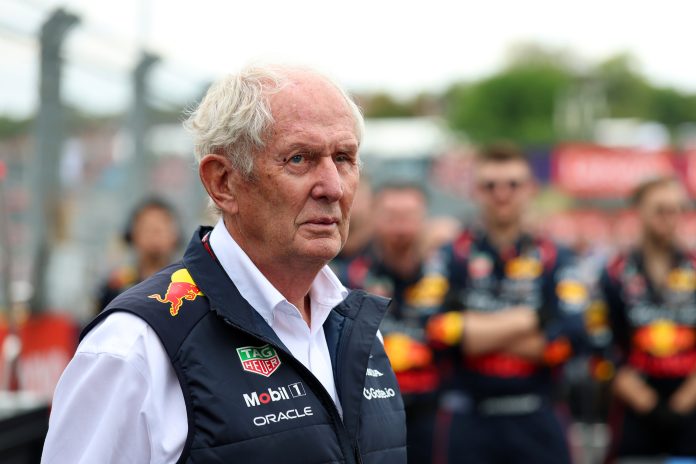
In a shocking turn of events that has reverberated throughout the world of Formula 1, Helmut Marko, the legendary architect behind Red Bull Racing’s driver development program, has officially exited the organization after more than two decades. While the announcement framed his departure as a personal decision, insiders reveal a far more complex narrative that suggests Marko’s exit is a culmination of mounting pressures and shifting dynamics within the sport.
Marko’s departure marks the end of an era for Red Bull, a team that has dominated the F1 landscape with an unprecedented approach to nurturing young talent. However, his influence has waned in recent years, as many believe he has become a relic of an outdated mindset. Once seen as a formidable force in the motorsport arena, Marko’s controversial remarks, particularly regarding Kimi Antonelli following the Qatar Grand Prix, have ignited social media firestorms and raised questions about his relevance in a rapidly evolving F1 environment.
Critics argue that Marko’s methods, characterized by a high-stakes, sink-or-swim philosophy, are no longer effective in a sport that demands a more nuanced and strategic approach to driver development. As rival teams aggressively scout the karting circuits for fresh talent, Red Bull’s once-dominant position has been compromised. The organization, once an unstoppable juggernaut in nurturing future champions, now finds itself at a crossroads, struggling to adapt to a new era of competition.
Marko’s legacy is undeniably intertwined with the rise of extraordinary talents like Sebastian Vettel and Max Verstappen, both of whom clinched multiple World Championships under his stewardship. However, as he steps away, many are left to ponder whether his time had truly come. His abrupt demeanor and unfiltered critiques may have galvanized some drivers, but they also created an environment of fear that may have stifled potential stars.
The question of Max Verstappen’s future with Red Bull looms large in this transition. Marko was historically aligned with the Verstappen camp, and whispers suggest that his exit could send shockwaves through the paddock, potentially impacting Verstappen’s loyalty to Red Bull. With the team facing internal changes and a re-evaluation of its strategies, the stakes have never been higher.
As Red Bull navigates this tumultuous period, Marko’s departure serves as a stark reminder that the landscape of Formula 1 is ever-changing. No longer can teams afford to rely on outdated models of talent management. The shift towards a more systematic, forward-thinking approach is not merely a trend; it’s a necessity for survival in this fiercely competitive arena.
Despite the controversies, Marko’s contributions to the sport cannot be overlooked. His aggressive recruitment strategy and willingness to invest in promising drivers have left an indelible mark on F1. Yet, as the sport evolves, it is clear that a new paradigm is required. The challenge for Red Bull is to find a leader who can blend innovation with the competitive spirit that Marko embodied, ensuring the team remains a formidable presence in the years to come.
Marko’s exit may signal the end of an era, but it also marks the start of an intriguing chapter for Red Bull Racing. With the foundations of the team shifting, the future is uncertain, yet ripe with potential. As fans and analysts alike watch closely, the next steps taken by Red Bull will be crucial in determining whether they can reclaim their status as the preeminent force in Formula 1.