


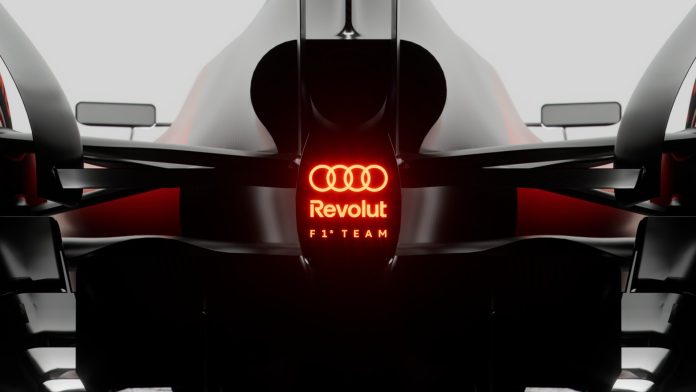
The introduction of Audi’s Formula 1 R26 challenger has sparked a whirlwind of excitement and intense scrutiny within the motorsport community, especially in light of a recent AI-generated image that misled fans and experts alike about the car’s design. This initial glimpse of Audi’s maiden venture into F1, captured during a private test at the Circuit de Barcelona-Catalunya, has ignited discussions on how the team interprets the newly established regulations for the 2026 season.
Last week, the German outfit took a bold step forward by unveiling a sleek, all-black iteration of the R26, which was put through its paces for 200 kilometers with drivers Nico Hulkenberg and Gabriel Bortoleto at the helm. Eager fans were treated to some amateur footage from the circuit, offering tantalizing hints of what to expect from Audi’s entry. However, the excitement took a dramatic turn when a digitally altered image of the car began to circulate online, leading many to believe it showcased the R26 in action.
Upon closer inspection, the image was swiftly debunked, revealing itself as a product of artificial intelligence rather than an authentic representation of Audi’s latest creation. This incident emphasizes a crucial lesson: in the age of digital manipulation, not everything that glitters is gold. As we dive deeper into the actual details of the R26, it becomes clear that the 2026 season promises to be a fascinating battleground for innovation and design.
One of the standout features of the upcoming regulations is the potential revival of design elements from the past. The R26 hints at a nostalgic nod to earlier eras, with pre-ground-effect characteristics suggesting a return to high-rake designs. This shift could see ride heights rising significantly, reminiscent of the pre-ground-effect days when Adrian Newey’s designs at Red Bull championed the positive rake concept. The re-emergence of such features could not only alter the aerodynamic landscape but also set the stage for fierce competition among teams.
Moreover, the R26 appears to sport a subtle shark fin, a design element that was popular until its ban in 2018 due to safety concerns. The anticipated return of the shark fin, alongside other innovations like double-mounted rear wings, points to an exciting blend of old and new as teams adapt to the evolving rulebook.
Additionally, speculation is rife about the return of pushrod suspension, a technology that had largely fallen out of favor during the ground-effect era. Teams such as Red Bull and Ferrari are reportedly considering this option, particularly for the rear suspension, as the new aerodynamic characteristics may render it more advantageous. Audi’s decision to employ a double-pushrod suspension set-up during the Barcelona test indicates a willingness to experiment, and it could set a trend across the grid.
As the countdown to the first official testing begins, excitement and speculation reach a fever pitch. With less than two weeks to go, the motorsport world is abuzz with anticipation over whether rival teams will adopt similar features or forge their own unique paths under the new regulations. The upcoming season promises a rich tapestry of designs and strategies, as teams vie for supremacy in a landscape that is as dynamic as it is competitive.
In this thrilling new chapter of Formula 1, the stage is set for innovation, rivalry, and perhaps a few surprises along the way. As Audi gears up to make its mark, the question looms large: how will the rest of the grid respond to the challenges and opportunities presented by the 2026 regulations? The answers will undoubtedly unfold in the coming weeks, captivating fans and reshaping the future of motorsport.