


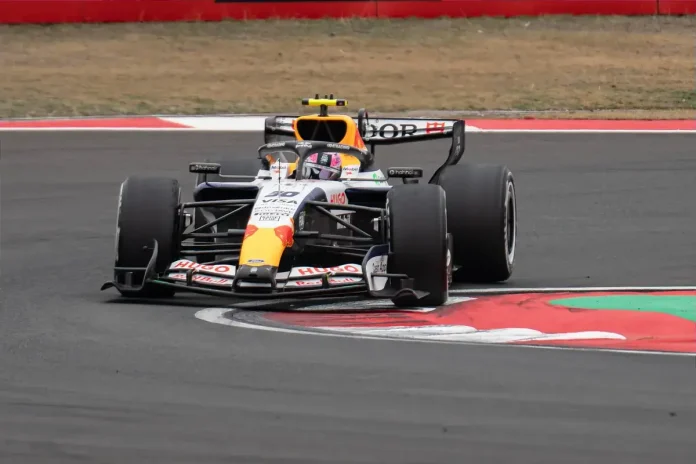
In a striking revelation that could shake the foundations of Formula 1, Liam Lawson of Racing Bulls has voiced urgent concerns regarding the perilous safety implications of the sport’s new regulations for 2026. As the F1 grid transitions into a groundbreaking hybrid era, the challenges posed by energy management during races have become alarmingly apparent, with drivers facing unprecedented risks on the track.
Just two races into the season, it’s evident that the changes have not won over many drivers. Max Verstappen has been particularly vocal, likening the new energy deployment dynamics to Formula E—but with a turbocharged twist. This candid criticism underscores a growing unease among competitors as they grapple with the implications of these sweeping reforms.
Lawson’s insights shine a light on a critical issue: the difficulty in avoiding collisions when competitors are recharging their cars in straight-line mode. The new regulations empower drivers to manage energy harvesting and deployment throughout their laps, a significant shift from the former DRS system, which had designated zones for such maneuvers. This newfound freedom creates drastic speed variations among cars, leading to potentially dangerous scenarios on the track.
The Racing Bulls driver has raised a red flag, pointing out that the current energy management strategies of various teams differ significantly. This lack of uniformity complicates racing conditions, making it increasingly challenging to predict how competitors will behave at high speeds. “I mean, at the moment, it’s sort of very inconsistent,” Lawson asserted, emphasizing the confusion that reigns as teams independently decide their energy strategies.
He elaborated on the perilous dynamics, noting, “You can be having quite a good run on a car, and all of a sudden they start charging, and you’re right behind them with SLM open. It’s not a lot you can do to avoid them.” His words reveal a chilling reality where contact could happen at any moment, raising alarm bells about the safety of drivers navigating these new racing conditions.
Lawson’s apprehensions reflect a broader discontent among drivers who feel the heat of the new technical regulations. As they await further data from the FIA and potential interventions, the tension on the grid is palpable. The ongoing debate about the safety and fairness of these changes continues to simmer, threatening to become one of the most contentious issues in F1.
With drivers like Lawson standing at the forefront of this critical conversation, fans and teams alike are left wondering what the future holds for this iconic sport. As the FIA assesses the situation, the question remains: will they step in to ensure the safety of drivers, or will they allow this precarious situation to evolve further? The upcoming races promise to be anything but predictable as the grid grapples with the implications of these revolutionary regulations.