


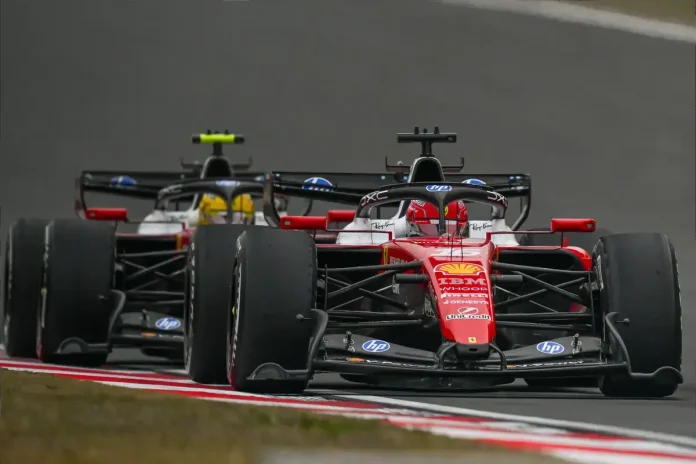
In a gripping display of racing strategy and fierce competition, the Chinese Grand Prix revealed the intense rivalry not just between drivers, but within teams themselves. As the lights went out, Lewis Hamilton and Charles Leclerc found themselves in a fierce struggle behind their Mercedes counterparts, quickly making their way to the front. However, this initial surge for Ferrari turned into a nightmare scenario as they battled for supremacy, allowing the competition to escape.
Hamilton briefly held the lead but was swiftly overtaken by rising star Antonelli on lap two, igniting a ferocious intra-team duel between Ferrari’s dynamic duo. As Hamilton and Leclerc exchanged positions, George Russell lurked ominously in the background, ready to capitalize on any misstep. This fierce competition among the Ferraris proved costly; they lost precious seconds to Antonelli, who began to pull away with every passing lap.
The tension escalated further after a Safety Car restart. Russell, determined to assert his position, engaged the Ferrari drivers in a heated battle, pushing them further off pace and out of the crucial fight for the lead. Hamilton ultimately executed a decisive move on lap 40, but by then, the damage was done. He finished a staggering 25 seconds behind Antonelli, with Leclerc trailing just three seconds further back.
F1 legend Jacques Villeneuve expressed his discontent with Ferrari’s internal struggle, labeling it “a little bit extreme” and detrimental to their race strategy. “They were running second and third. Then they were fighting so hard, destroying their tyres. In those two laps, they lost five seconds to Antonelli,” he explained. Villeneuve underscored the importance of teamwork, stating that had Ferrari worked together instead of against each other, they could have posed a significant threat to Mercedes.
Currently trailing Mercedes by 31 points in the Constructors’ Championship, the pressure is on Ferrari to rectify their strategy. Villeneuve’s insights serve as a wake-up call for the Scuderia, highlighting that if they can harness their potential and focus on collective goals, they could indeed challenge Mercedes more effectively.
Ferrari’s team principal, Fred Vasseur, took a more optimistic view of the situation, emphasizing the importance of competition within the team as a morale booster. “Huge respect for both of them,” he remarked, acknowledging the professionalism of Hamilton and Leclerc. Vasseur defended their racing instincts, suggesting that fostering this competitive spirit is essential for team development, though he recognized the risk of appearing reckless in hindsight.
As the season progresses, the stakes continue to rise. With the battle for the championship heating up, all eyes will be on Ferrari as they strive to balance fierce competition with strategic teamwork. The question remains: will they learn from their mistakes, or will internal rivalries continue to undermine their quest for glory? The next races could very well determine the fate of Ferrari’s championship dreams.