


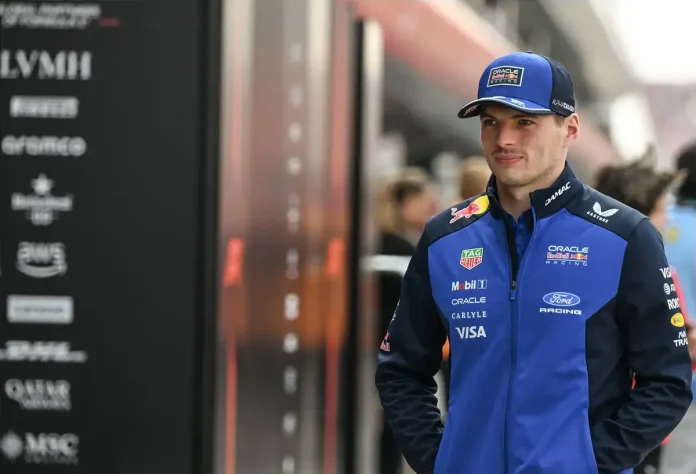
Max Verstappen finds himself under a magnifying glass as Ralf Schumacher delivers a powerful wake-up call, urging the young F1 star to reconsider his public criticisms of the sport’s evolving regulations. The Red Bull driver has not held back, labeling the new technical rules as “anti-racing” and likening them to “Formula E on steroids” during pre-season testing. This bold declaration comes on the heels of a disappointing performance at the Chinese Grand Prix, where Verstappen’s RB22 suffered a coolant leak and had to retire, prompting him to insult the spectators by stating that those who enjoyed the race “didn’t know racing.”
Ralf Schumacher, a seasoned voice in the motorsport community, has taken issue with Verstappen’s approach, highlighting a crucial difference between him and his legendary brother, Michael Schumacher. Ralf emphasized the importance of unity within a team, recalling how Michael consistently supported his team without publicly airing grievances. In a candid conversation on the Backstage Boxengasse podcast, Ralf remarked, “What is very important now, and this is also the big difference with my brother, is that he always stood behind his team and did not bring out criticism.” His words resonate with the ethos of teamwork and solidarity that characterized Michael’s era at Ferrari.
Ralf continued to paint a picture of the current dynamics at Red Bull, lamenting that Verstappen has taken center stage, leaving little room for alternative voices within the team. He pointed out that in contrast to Red Bull, teams like Mercedes have a more diverse range of contributors, suggesting that Verstappen’s prominence may be forcing him into a position where he feels obligated to comment on every issue. “At Mercedes, you see that there is more talk from engineers, if you know what I mean,” Ralf noted, hinting at a more collaborative environment that could foster better outcomes.
As Red Bull navigates this turbulent period, Ralf Schumacher is looking to Laurent Mekies to step up as a leader capable of addressing the challenges at hand. He urged Mekies to not only demonstrate his technical prowess but also to build a strong network that extends beyond Italy, given his previous experience at Ferrari. This call for leadership comes at a time when Verstappen’s public outbursts could threaten the cohesion and morale of the team.
In the high-stakes world of Formula One, where every word can ripple through the paddock, Verstappen’s fiery remarks serve as a crucial reminder of the delicate balance between individual expression and team unity. As the drama unfolds, the question remains: will Verstappen take heed of Ralf’s advice and strive for a more harmonious approach, or will his fiery spirit continue to dominate the headlines? The upcoming races will undoubtedly reveal the true impact of this ongoing narrative in the fast-paced world of motorsport.