


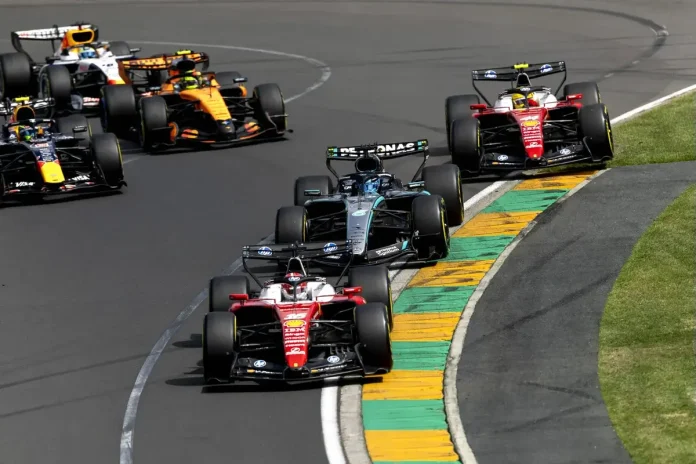
The 2026 era of Formula 1 has exploded onto the scene with an astonishing display at the Australian Grand Prix, leaving critics and fans buzzing with excitement. Gone are the pre-race apprehensions, replaced instead with a thrilling spectacle that had everyone on the edge of their seats. This isn’t just a race; it’s the dawn of a new chapter in F1, challenging the skeptics who feared that the new regulations would lead to a lackluster season.
The action was frenetic from the get-go, with seven lead changes in the opening ten laps. What unfolded was a gripping duel between the titans of the sport—Mercedes and Ferrari—though it’s crucial to note that Ferrari’s strategic blunders played a significant role in the outcome. The early promise of wheel-to-wheel battles reminiscent of the 2022 season sparked nostalgia but also caution. Just as Max Verstappen and Charles Leclerc’s thrilling clashes in the opening races of that year faded into a more predictable narrative, there’s a palpable fear that the brilliance seen in Australia may not be sustained. The teams, as they adapt and optimize their 2026 packages, might figure out how to tame this fresh formula, potentially stifling overtaking opportunities as their understanding deepens.
The Australian Grand Prix revealed an intriguing shift in the very nature of racing. Charles Leclerc’s audacious leap into the lead showcased the new regulations’ potential, and George Russell’s struggles to overtake him highlighted the complexities of modern racecraft. It’s no longer just about getting ahead; it’s a tactical game of energy management and strategy. Russell’s attempts to pass were a captivating dance of calculation, where every inch gained could mean losing out on battery power needed to stay ahead. This strategic depth added layers of excitement, especially at a challenging circuit like Albert Park, where energy conservation becomes paramount.
Yet, as exhilarating as the early laps were, they also raised questions about the sustainability of such dynamic racing. The variables introduced by the new rules created a chaotic yet electrifying atmosphere, but as teams begin to decipher the nuances of energy deployment and battery management, the unpredictability that made the opening race so thrilling may wane. The excitement of the unknown is a double-edged sword; while it fosters gripping competition, it may also lead to a more calculated and predictable form of racing in the not-so-distant future.
Despite the initial chaos, the race delivered a sigh of relief for F1 fans yearning for excitement. Leclerc’s defensive prowess against Russell’s faster Mercedes was a testament to the unpredictability that new regulations can bring. However, there remains a caveat: while the early exchanges were thrilling, they could be attributed to teams still finding their feet in this new landscape. The spectacle of racing is undeniably captivating, but concerns linger regarding the long-term implications of these rules. The potential for a more processional race looms, particularly once teams fully grasp the intricacies of the new formula.
Moreover, the insights gained from this weekend will undoubtedly aid teams in refining their strategies. As drivers and engineers work to optimize their approaches, the critical question remains: will the racing become more engaging or devolve into predictability? The thrill of the opening laps, marked by unexpected overtakes and strategic gambits, could soon give way to a more orderly procession as teams gain clarity on the best tactics.
As the dust settles on the Australian Grand Prix, it’s clear that while the race was a resounding success in terms of entertainment, the underlying issues that have plagued F1—particularly the energy-starved power units and the reliance on battery performance—remain. Thus, while fans revel in the chaos of a brand-new racing season, the future of exciting competition hangs in the balance. Will F1 find a way to maintain the magic of unpredictability, or will the new era inevitably fall into the same patterns as before? The clock is ticking, and all eyes will be on the next races to see if this newfound excitement can be sustained.